


What Is HIPIMS Deposition?
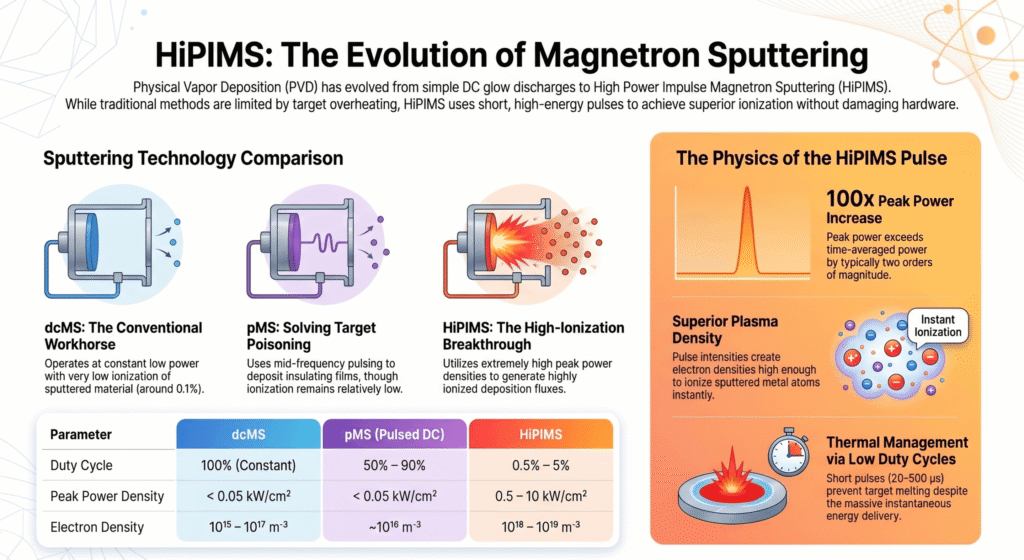
High Power Impulse Magnetron Sputtering (HIPIMS) is an advanced physical vapour deposition (PVD) technique that enhances conventional magnetron sputtering by applying short, high-power pulses to a sputtering target. Typical pulse lengths range from 50 to 200 microseconds, with low duty cycles and frequencies that limit target heating while generating extremely dense plasmas. This approach produces a highly ionized flux of sputtered material, with ionization levels reaching up to 90%, enabling superior control over film growth and PVD coating properties.

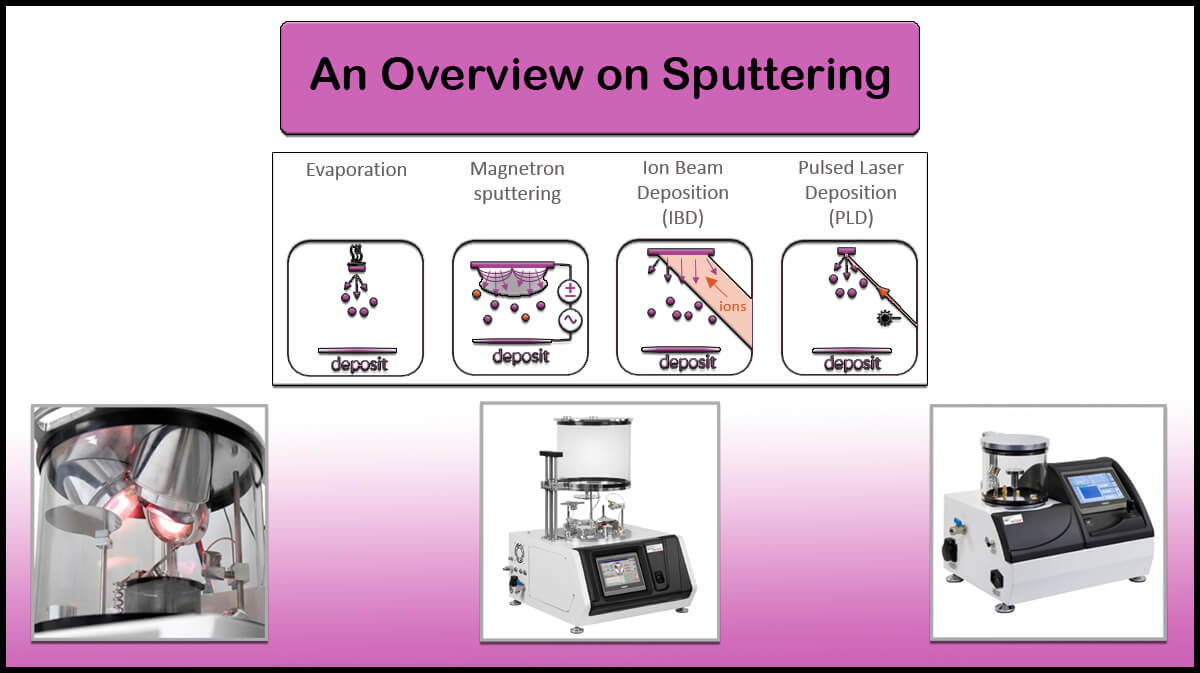
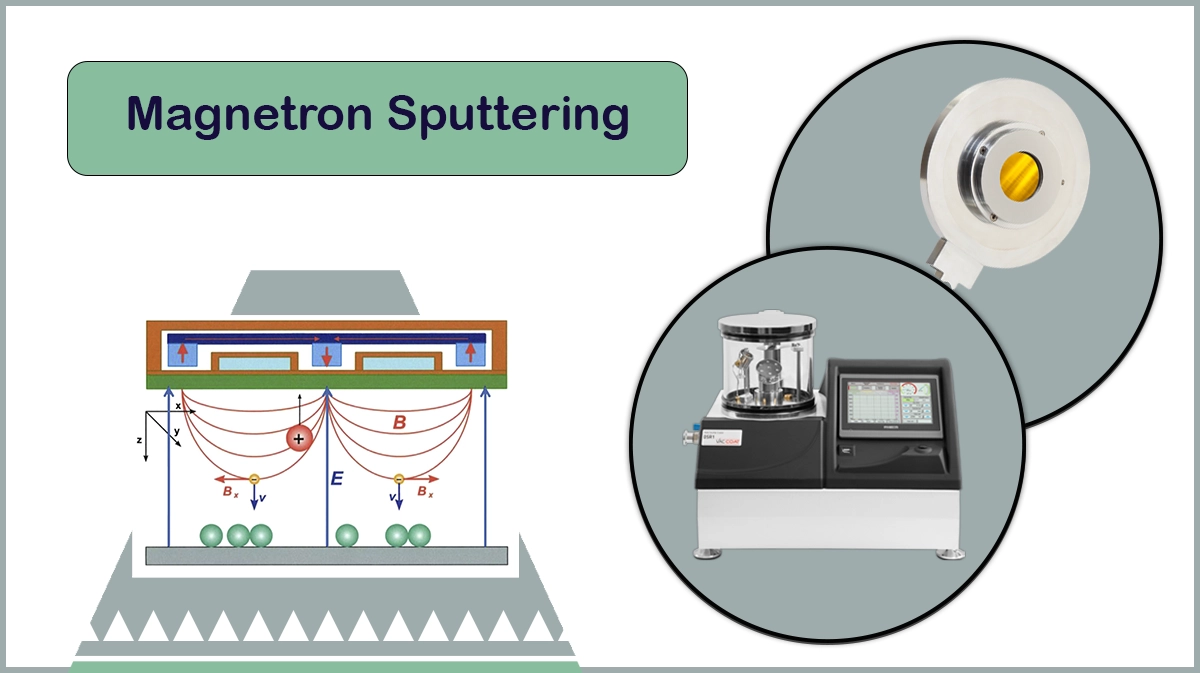
HIPIMS deposition is based upon the fundamental principles of magnetron sputtering, where magnetic field of the cathode confine electrons above the target to increase plasma density, sputtering rate, hence enhancing thin film deposition efficiency. The HIPIMS deposition technique is introduced in the late 1990s, and has evolved to include innovations such as Modulated Pulse Power (MPP), which uses multi-stage pulses to improve plasma stability and deposition rates. Nowadays, HIPIMS is widely recognised for producing dense, smooth, and high-performance PVD coatings for various requirements in industrial, optical, electronic, and tribological applications.
How Does HIPIMS Work?
HIPIMS deposition process consists of applying short, high-power pulses to a standard magnetron cathode. Very high peak power densities, short pulse durations, and low duty cycles are the defining characteristics of HIPIMS. Typical operating conditions include peak power densities of 0.5–10 kW/cm², pulse durations of 10–200 µs, frequencies of 10–2000 Hz, and duty cycles below 10% (Figure 1).

Plasma Generation Mechanism in HIPIMS
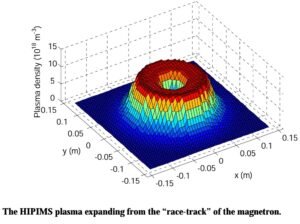
The HIPIMS process begins similarly to conventional sputtering. A vacuum chamber is evacuated and filled with a process gas, typically argon. A magnetic field confines electrons near the target surface, increasing ionisation efficiency. However, instead of applying continuous power, HIPIMS delivers brief, high-energy pulses. During each pulse, a highly dense plasma forms near the target, and large numbers of argon ions bombard the target material. As atoms are ejected from the target, a substantial fraction becomes ionised, often reaching ionisation levels of 50–90% depending on the material.
Plasma Ionisation



HIPIMS Pulse width and Duty Cycle
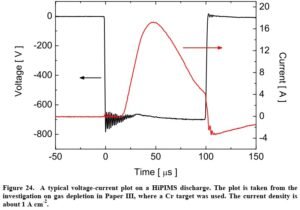
A HIPIMS pulse evolves through several stages: ignition, where the process gas is ionised; current rise, during which plasma density rapidly increases; gas rarefaction caused by intense ionisation and heating; self-sputtering, where ionised metal atoms sustain the discharge; and finally afterglow, as the plasma decays after pulse termination. The duty cycle as defined by tpulse/tperiod x 100% is typically below 10%, which prevents overheating and enables extremely high peak powers.
This dynamic plasma behaviour enables deposition of dense, smooth, and highly adherent coatings with superior microstructural properties.
HIPIMS vs DC Sputtering
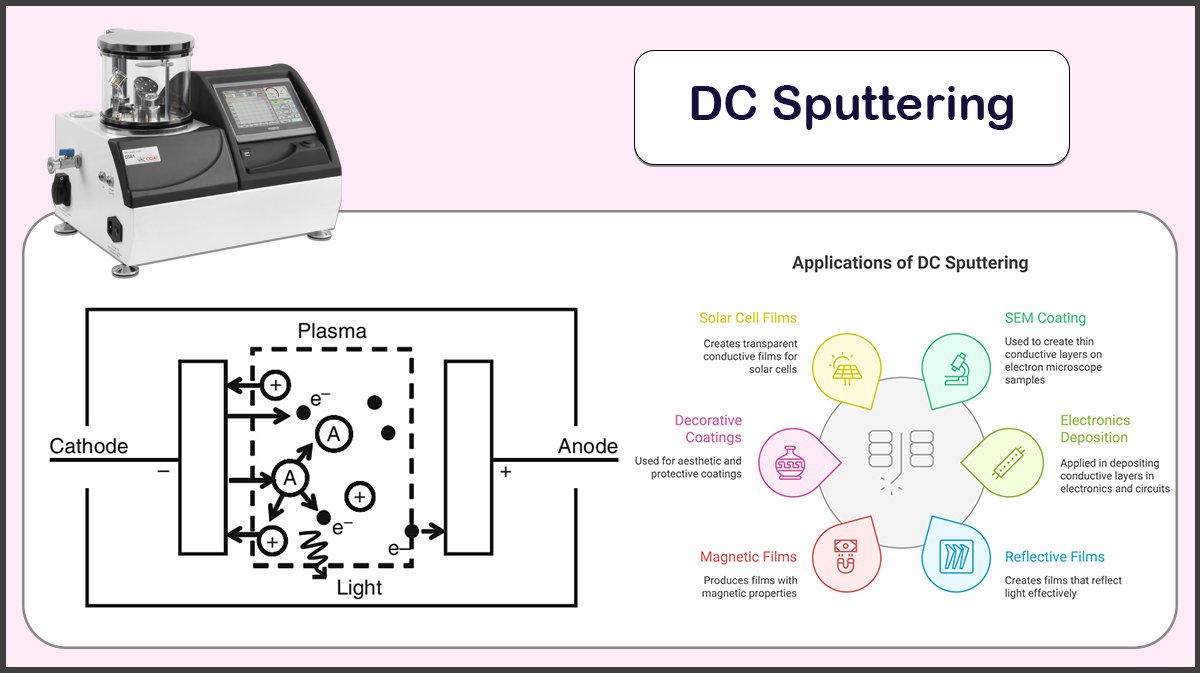
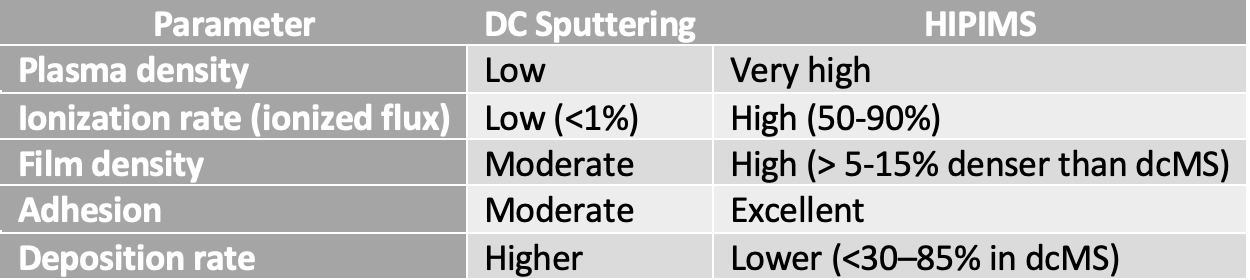
Conventional Direct Current Magnetron Sputtering (dcMS) and High Power Impulse Magnetron Sputtering (HIPIMS) are both physical vapor deposition (PVD) techniques in two ionisation regime, differing significantly in power level and duty cycle applied to the target, resulting in dissimilar plasma properties.
- Power level: Whereas dcMS operates using a continuous negative voltage and relatively low power densities, below 0.05 kW/cm², HIPIMS applies short, high-power pulses, ranging from 0.5 to 10 kW/cm², that create extremely dense plasmas without causing excessive target heating.
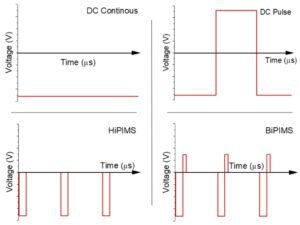
- Duty cycle: The DC sputtering process has been evolved through decades from the conventional DC to pulsed DC, and then HIPIMS, as shown Figure 3. The duty cycle in DC magnetron sputtering is 100% (a continuous applied voltage), while in HIPIMS is about 0.5-10%.
- Current waveform: Conventional dcMS maintains a constant current, though HIPIMS discharge current is characterized by complex temporal phases, consisting of an initial peak and either a stable plateau or a second increase leading toward self-sputter runaway.

These two specific quality of HIPIMS pulses shapes the specific features of HIPIMS

plasma and the resulting PVD coating, listed below:
- Plasma and Ionization Properties
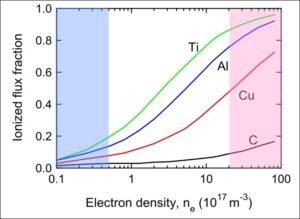
A defining feature of HIPIMS is its high ionization fraction, implying highly ionized flux of the sputtered material, which is very low in dcMS, where the plasma is mostly dominated by neutral atoms. However, the target material substance significantly affects the ionized flux fraction, especially at higher electron densities (Figure 4).

Deposition Rate
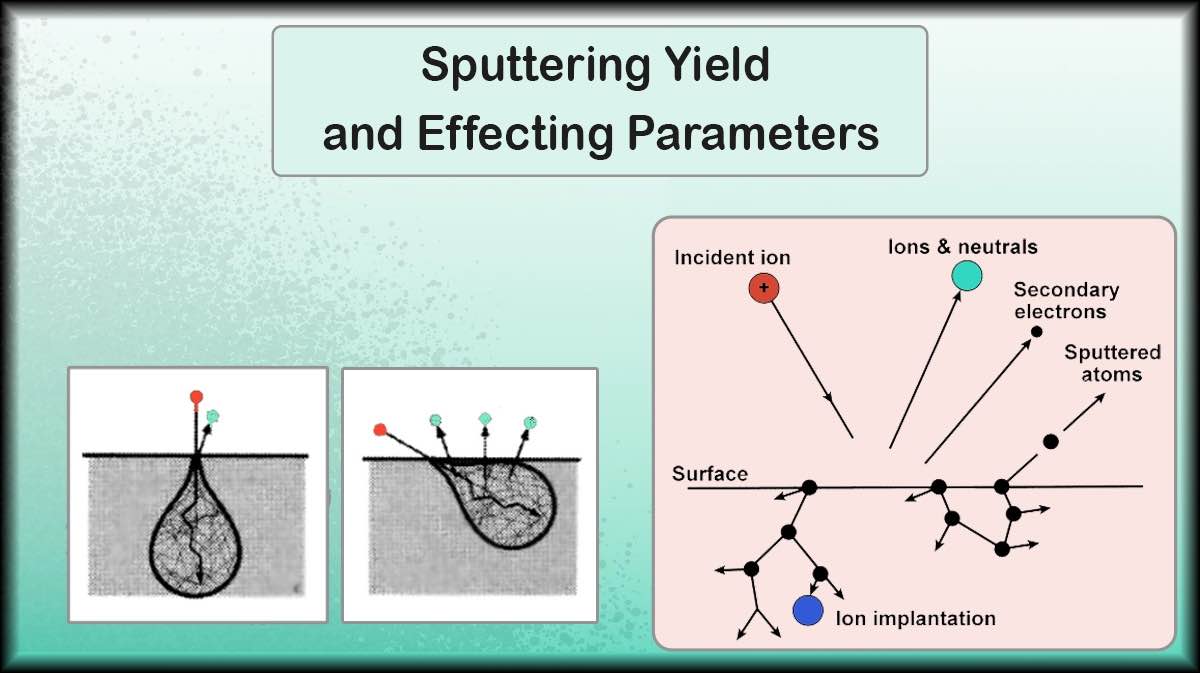
The thin film deposition rate in HIPIMS is lower for the same average power in dcMS due to back-attraction phenomena, in which ionized metal ions are attracted to the target through the electric fields rather than arriving to the substrate. The deposition rate in HIPIMS depends on the pulse length; the lower the pulse length, the higher the deposition rate, as investigated, a decrease in pulse length from 20 μs to 5 μs, can enhance the deposition rate from 20% to 70% in some cases.
Enhanced 3D Coverage in HIPIMS Deposition by Applying Substrate Bias
Furthermore, applying a bias voltage to the substrate, so-called substrate bias, creates additional electric field above the substrate that can guide ionized target atoms in HIPIMS to the substrate. Compared to dcMS line-of-site deposition process, substrate biasing in HIPIMS deposition helps to efficiently coat complex or 3D-structures.
Though, it is vital to optimize the substrate bias voltage to avoid re-sputtering of the deposited surface and obtain high-quality PVD coatings with superior features as adhesion and conformal coverage while maintaining process stability.
Reactive Sputtering and Hysteresis
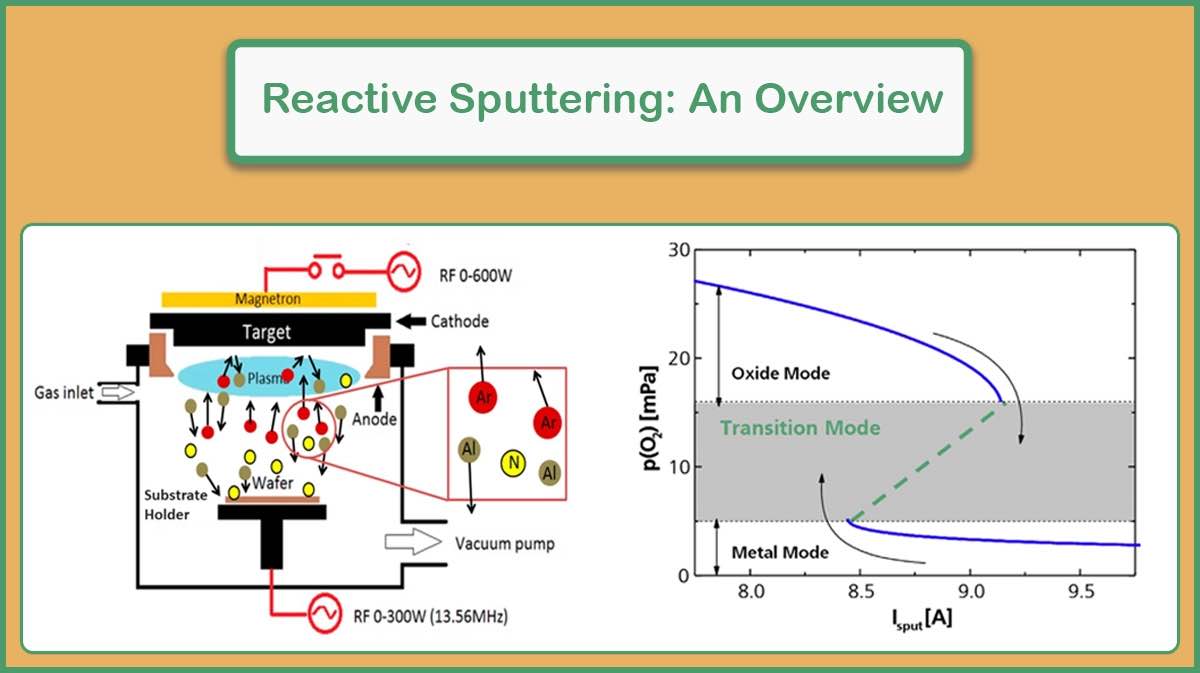
The reactive sputtering in the conventional DC sputtering suffers from hysteresis effect when injecting reactive gases, which leads to instability during the coating process. The hysteresis effect can be reduced to deposit stoichiometric compounds at higher rates in HIPIMS reactive sputtering in a stable process in the transition region.
HIPIMS technique for reactive sputtering is commonly used in deposition of oxides, nitrides, carbides, and transparent conductive films, such as TiN, AlTiN, CrN, ZnO, and ITO.

Thin Film Characteristics
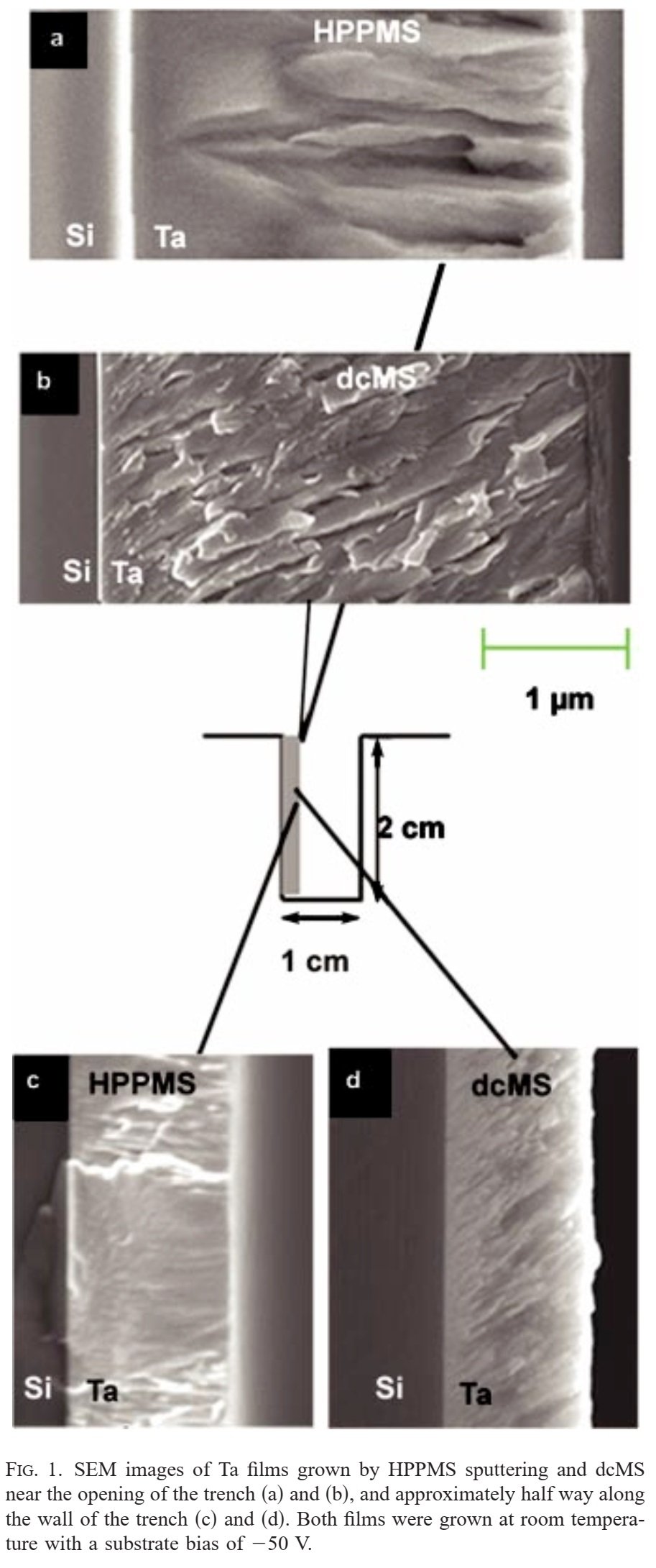
The resulting thin films created by HIPMIS technique are typically denser and smoother than films deposited by dcMS, owing to intense ion bombardment.
The energetic ion flux suppresses the common columnar morphology in dcMS, producing a featureless microstructure with thermodynamically stable or metastable phases and higher compressive stress.
Advantages of HIPIMS Technology
Thin film deposition by HIPIMS technique results in high-density and smoother films with superior adhesion, fewer structural defects, and improved coating uniformity. HIPIMS coatings commonly represent enhanced mechanical properties that can be controlled through adjusting HIPIMS process parameters to achieve desired thin film microstructures.
Limitations and Challenges of HIPIMS
HIPIMS like any other coating method has its shortcomings, including reduces deposition rate, requirement for high peak power generation and enhanced cooling system to avoid target heating. Although the excess process parameters provide supplementary control over the process, it also results in more complex process optimization.


Applications of HIPIMS Coatings
HIPIMS coatings can be used in many applications due to enhanced smoothness and mechanical features, including:
- Semiconductor Manufacturing: HIPIMS is useful to fabricate barrier layers, seed layers, and copper interconnects for improved step coverage and gap filling, especially in nanoscale structures.
- Optical Coatings: Since HIPIMS can generate thin films with low defect density, smoother surface, and high optical transparency, it is convenient in production of transparent conductive oxides, antireflective coatings, and infrared coatings.
- Hard Protective Coatings: One of the largest industrial uses of HIPIMS is creating hard protective coatings of TiAlN, AlCrN, CrN, etc., for various instruments such as aerospace components, drills and milling cutters to obtain improved wear resistance, better oxidation resistance, longer tool life.
- Biomedical Implants: HIPIMS coatings like TiN, DLC (diamond-like carbon), and hydroxyapatite are used in orthopaedic and dental implants, as well as surgical tools to enhance biocompatibility, wear and corrosion resistance.
- Energy Storage Devices: Dense microstructures created by HIPIMS technique can be employed in energy harvesting and storage devices like solar cells, fuel cells, and batteries for their improved electrical conductivity, chemical stability, and lifetime.
- Decorative PVD Coatings: Decorative coatings, such as consumer electronics, watches, and luxury hardware, require uniformity, along with excellent hardness and adhesion, which are guaranteed by HIPIMS deposited thin films.
Emerging Variations of HIPIMS
- Bipolar HIPIMS
In bipolar HIPIMS positive pulses follow negative pulses (Figure 3) that prevents arcing, with advantages like reduced charge accumulation, and improved insulating film deposition, best for creating oxide coatings and dielectric substrates.
- Deep Oscillation Magnetron Sputtering (DOMS)
DOMS introduces oscillatory waveforms into the pulse, promoting improved plasma stability, ion energy distribution, and control over thin film deposition.
- Modulated Pulse Power (MPP)
MPP, considered as an intermediate technology between conventional HIPIMS and pulsed sputtering, uses longer pulse trains with controlled pulse shaping, featuring lower peak currents, reduced arcing, and improved deposition rates.
- Hybrid HIPIMS/DC Processes:
A combination of HIPIMS and DC magnetron sputtering (DCMS) is commonly used industrially to achieve higher deposition rate, better plasma stability, and lower cost. In this configuration one target operates in HIPIMS mode and another operate in DC mode.
Future Trends of HIPIMS Technology
HIPIMS deposition technique is rapidly evolving, according to advancements in plasma engineering, materials science, and manufacturing automation, as well as and requirements for higher deposition rate and sustainability that shape HIPIMS future.
- Higher deposition efficiency issue in HIPIMS should be overcome by solutions as optimising pulse waveforms, using hybrid power systems, improving magnetic confinement, and multi-cathode systems.
- AI-assisted process optimisation by real-time plasma monitoring, loop control and pulse tuning by machine learning are increasingly used to maintain optimal pulse parameters and coating quality automatically.
- High-Entropy Alloy Coatings with exceptional mechanical and thermal properties can be coated through HIPIMS deposition.
- Large-area industrial PVD coating for architectural glass, automotive parts, and large semiconductor wafer manufacturing are getting commercially viable.
- Advanced semiconductor fabrication for quantum devices, spintronics, and innovative semiconductor architectures are feasible by HIPIMS dense and defect-free thin films.
Sustainable coating technologies and green manufacturing can be contributed through extended lifetime of HIPIMS coatings with lower chemical waste, reduced rare-metal and energy consumption

Vac Coat Solutions for Thin Film Deposition and Sputtering Applications
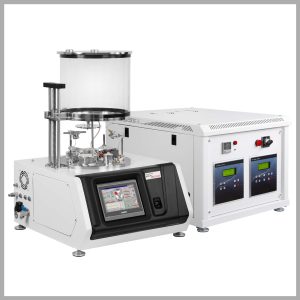
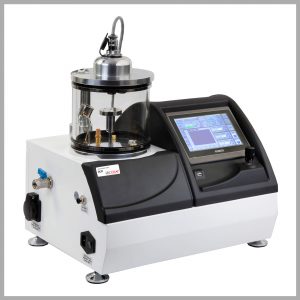
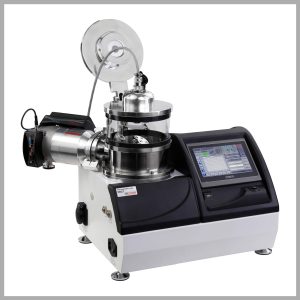
Vac Coat offers vacuum coating systems, including magnetron sputtering devices, carbon coaters, thermal evaporators for metal coating, and pulsed laser deposition systems. Vac Coat provides hybrid coating systems that enables using different PVD coating method in a single platform with customized features, such as DSCT-T, DST3-T and glovebox-compatible DST2-TG models.
Some of Vac Coat's Product


References
- Mattox, D. M. “Physical sputtering and sputter deposition.” The Foundations of Vacuum Coating Technology 2 (2018).
- Lundin, Daniel. The HIPIMS process. Linkopings Universitet (Sweden), 2010.
- Mattox, Donald M. “Physical sputtering and sputter deposition (sputtering).” Handbook of physical vapor deposition (PVD) processing 2 (2010): 237-279.
- Ganesan, Rajesh, Matthew Linford, Joshua Pinder, Ju-Liang He, and David TA Matthews. “HIPIMS: Pioneering the Future of Thin Films.” Vacuum Technology & Coating 2025, no. Nov. (2025).
- Helmersson, Ulf, Martina Lattemann, Johan Bohlmark, Arutiun P. Ehiasarian, and Jon Tomas Gudmundsson. “Ionized physical vapor deposition (IPVD): A review of technology and applications.” Thin solid films 513, no. 1-2 (2006): 1-24.
- Alami, Jones, P. O. Persson, Denis Music, J. T. Gudmundsson, J. Bohlmark, and Ulf Helmersson. “Ion-assisted physical vapor deposition for enhanced film properties on nonflat surfaces.” Journal of Vacuum Science & Technology A 23, no. 2 (2005): 278-280.
- Ganesan, Rajesh, et al. “HIPIMS: Pioneering the Future of Thin Films.” Vacuum Technology & Coating 2025.Nov. (2025).
- Böhlmark, Johan. Fundamentals of high power impulse magnetron sputtering. Linkopings Universitet (Sweden), 2006.
- Sarakinos, Kostas, Jones Alami, and Stephanos Konstantinidis. “High power pulsed magnetron sputtering: A review on scientific and engineering state of the art.” Surface and coatings technology 204.11 (2010): 1661-1684.
- Lundin, Daniel, Tiberiu Minea, and Jon Tomas Gudmundsson, eds. “High power impulse magnetron sputtering: fundamentals, technologies, challenges and applications.” (2019).
- Alami, Jones, J. T. Gudmundsson, J. Bohlmark, Jens Birch, and Ulf Helmersson. “Plasma dynamics in a highly ionized pulsed magnetron discharge.” Plasma Sources Science and Technology 14, no. 3 (2005): 525-531.