
Thermal Evaporators
Different Models of Thermal EvaporatorAdvanced thermal evaporation systems for controlled thin-film deposition and analysis.
Thermal Evaporators
Thin film deposition by thermal evaporation is a physical vapor deposition (PVD) technique for creating thin films of different materials. Thermal evaporation deposition technique is based on thermal heating of the source material in a high-vacuum chamber (pressure < 10-5 Torr), which increases its vapor pressure and leads to the formation of a thin film of the material on the substrate inside the chamber. Vac Coat offers high-vacuum DTE and DTT thermal evaporators optimized for the deposition of different materials’ thin films.
Thermal evaporation systems commonly work through resistive heating of a source holder. The source holders can be in the form of a metallic boat or a basket of refractory wire made of W or Mo covered by aluminum oxide. In the thermal evaporation process the material is evaporated from the boat/basket holder heated by passing a sufficiently high electric current and is deposited on the substrate positioned normally above the sample.
The thermal evaporation deposition is rather slow but provides more control over the uniformity and thickness of the deposited thin film compared to other PVD methods, like sputtering or electron-beam evaporation. On the other hand, the melting point of certain materials are so high that resistive heating could not afford enough energy to vaporize them, where other PVD methods could be beneficial.
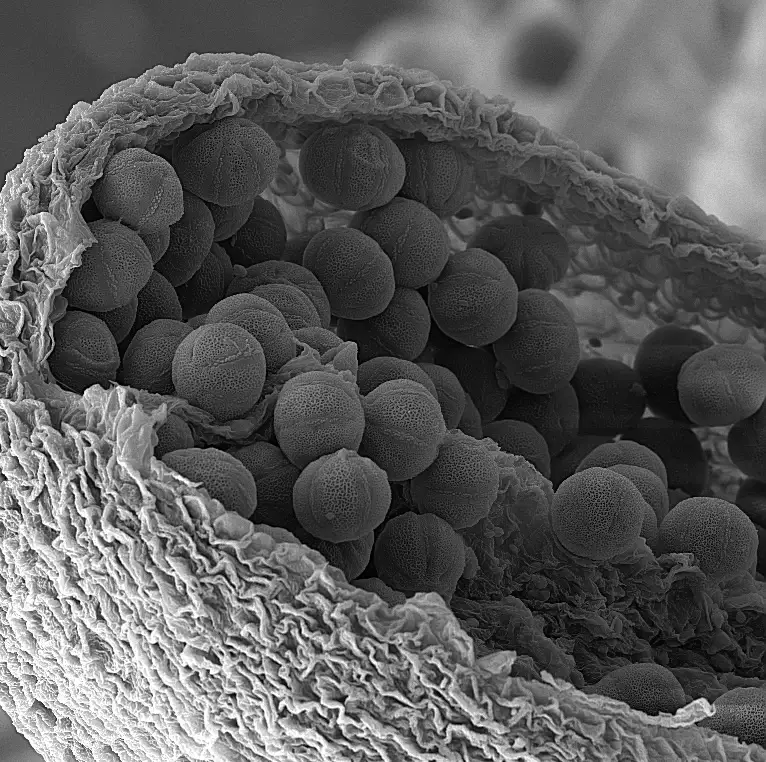
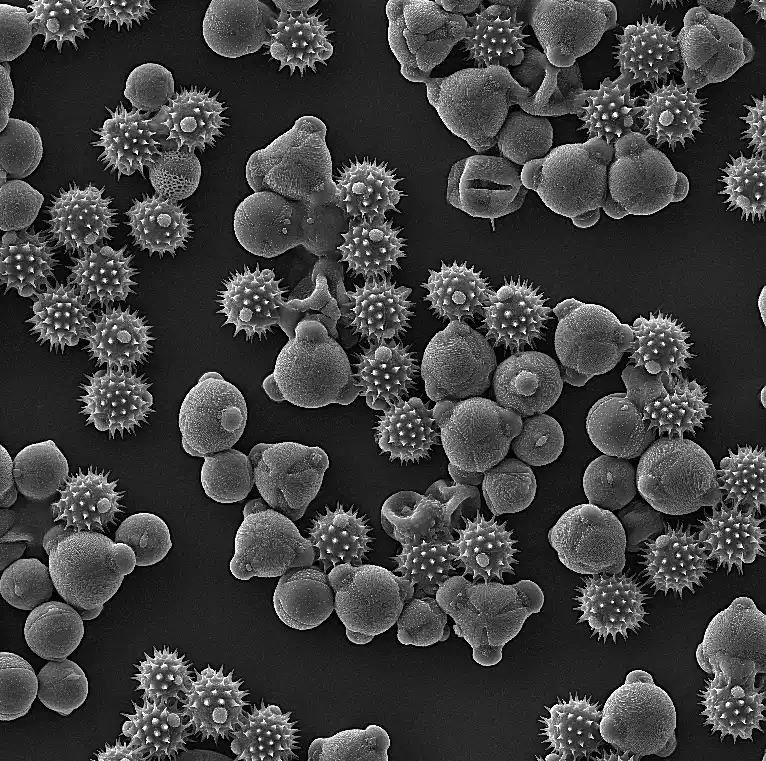
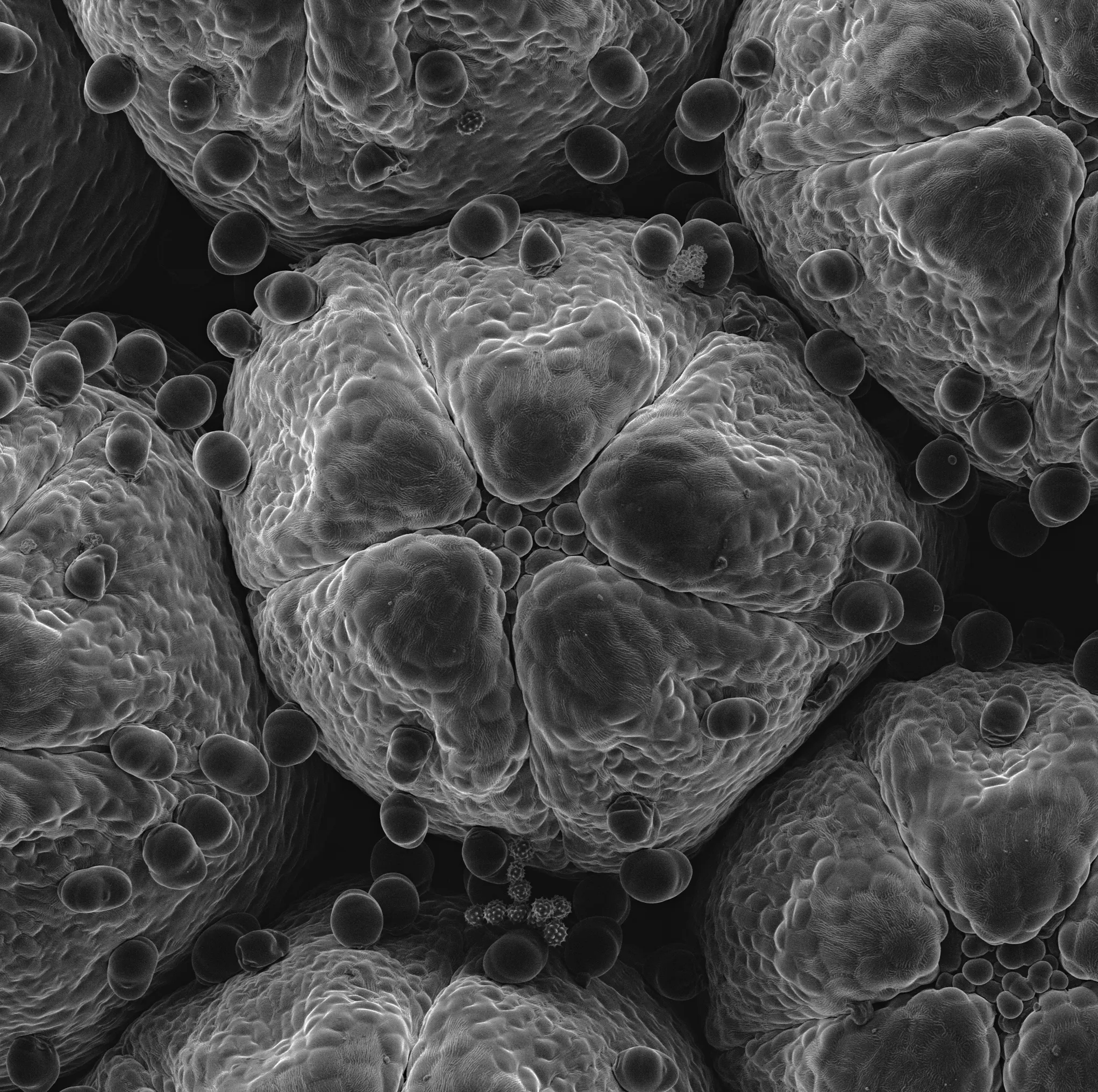
Common Thermal Evaporators for SEM Sample Preparation
- Single Systems
- Hybrid Systems
Vac Coat's Thermal Evaporators
Vac Coat manufactures turbo-pumped thermal evaporators in small and large chambers, DTE and DTT, respectively. DTE is a short-term metal evaporator with a small (170 mm dia.) chamber that can be vacuumed quickly and is an ideal vacuum coating device for SEM sample preparation. The specimen in DTE can be positioned on different substrate holder configurations, above or under the source holder.
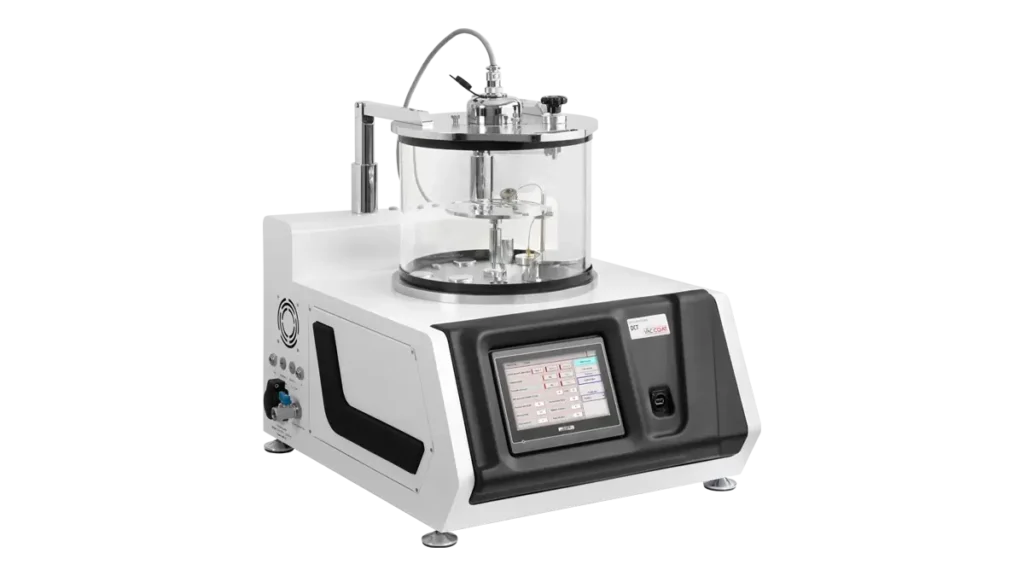
The DTT desk thermal evaporator is capable of extended-duration film deposition without any damage to the coating system. Also, DTT can be provided with an extra glass chamber to double the deposition chamber height and improve thin film uniformity and thickness monitoring. DTT, due to its larger 300 mm dia. chamber, is provided with three source holders, suitable for co-evaporation and alloying (optional extra power sources are required). DTT can also be delivered with a substrate cooling holder and glove box installation interface as optional hardware features.
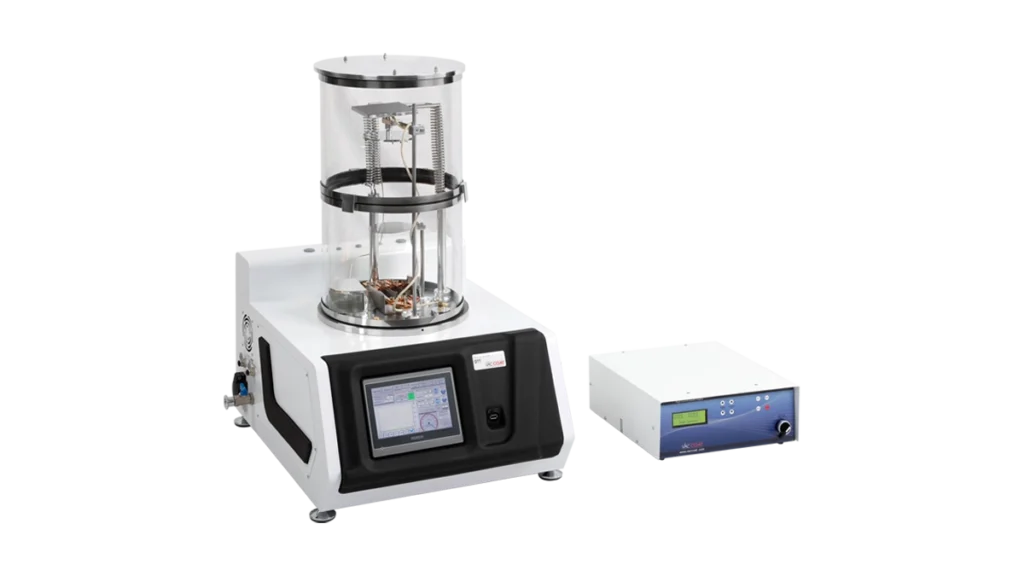
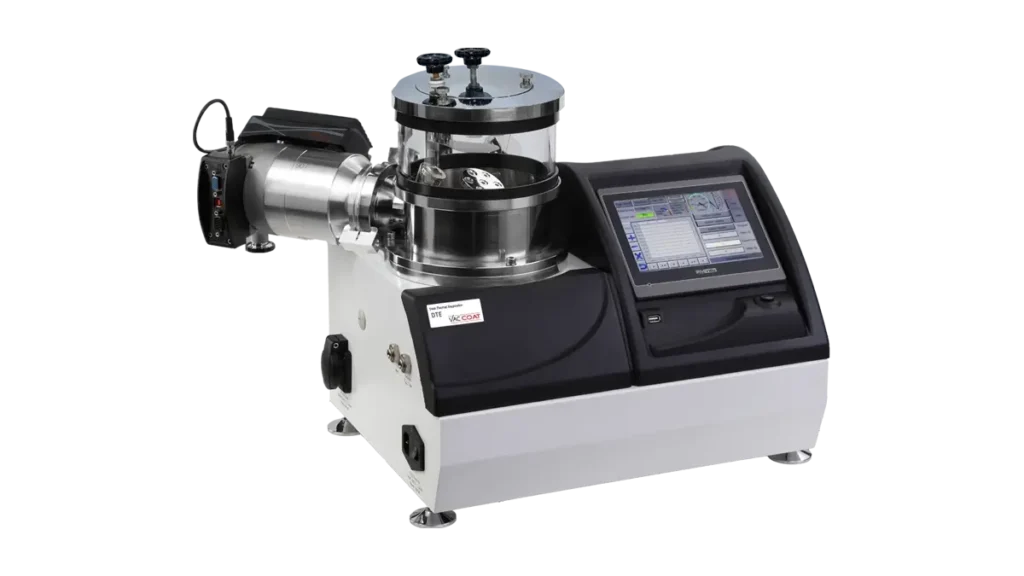
Hybrid Coaters (Thermal Evaporator + Sputter/Carbon Coater)
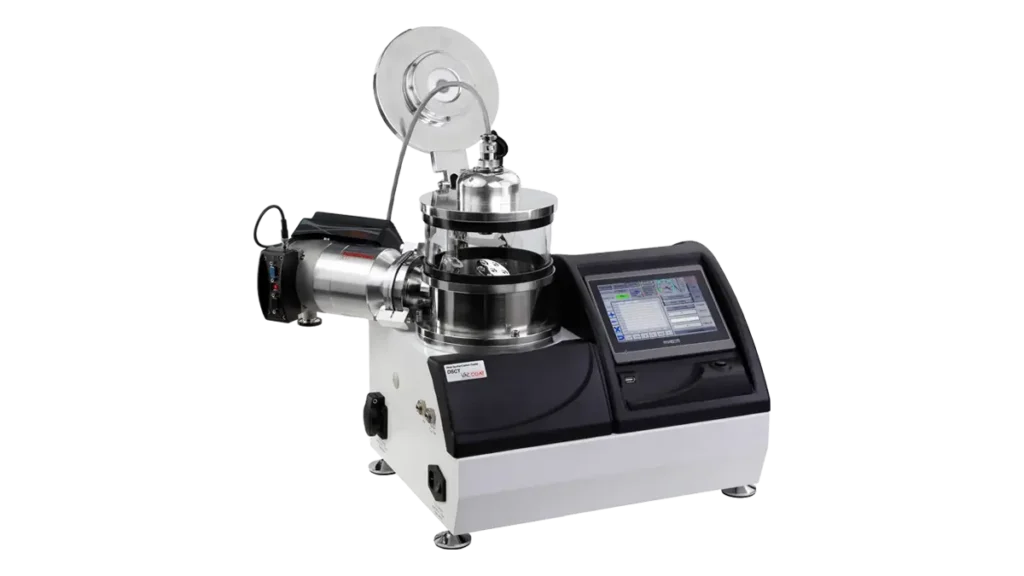
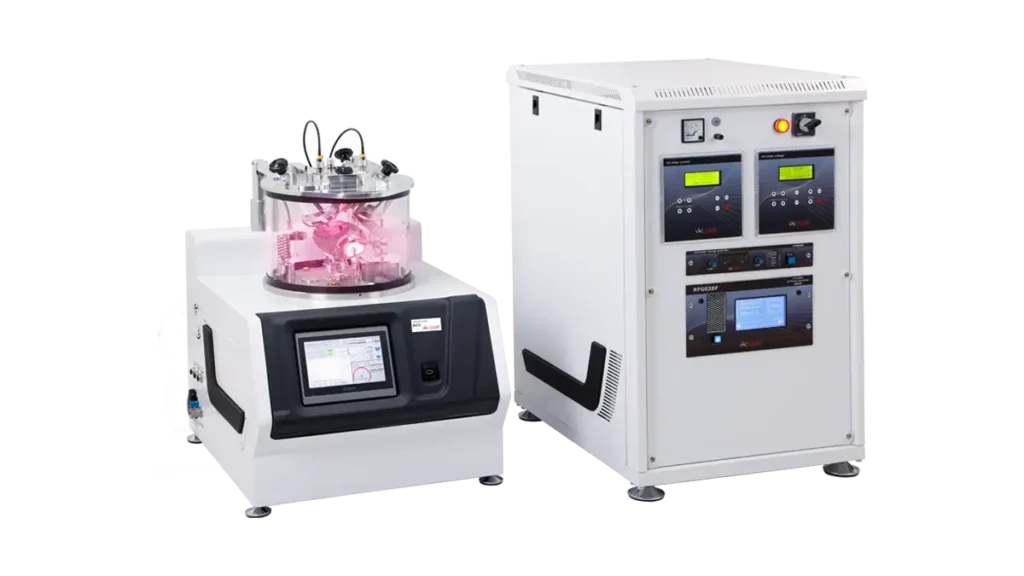
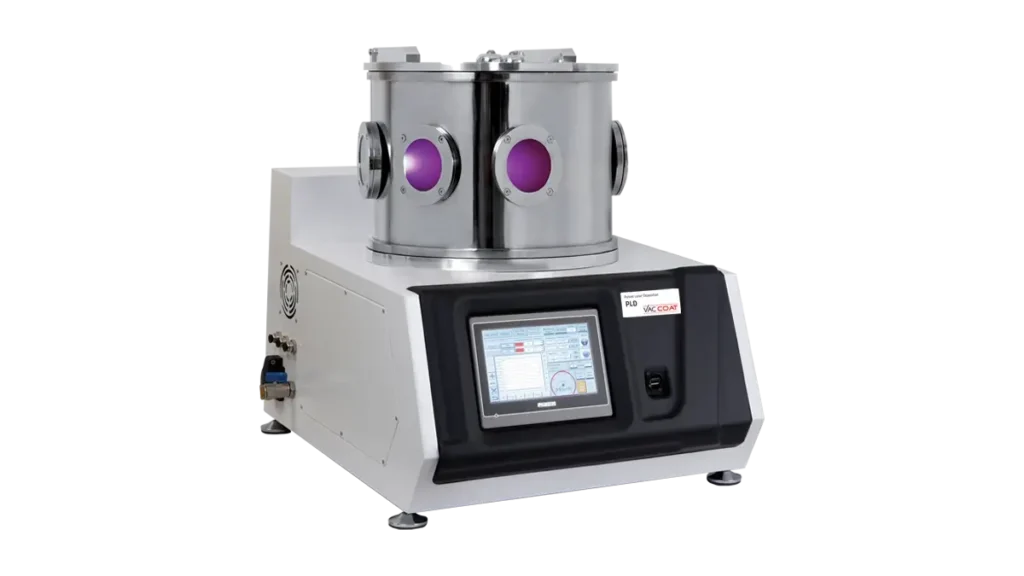
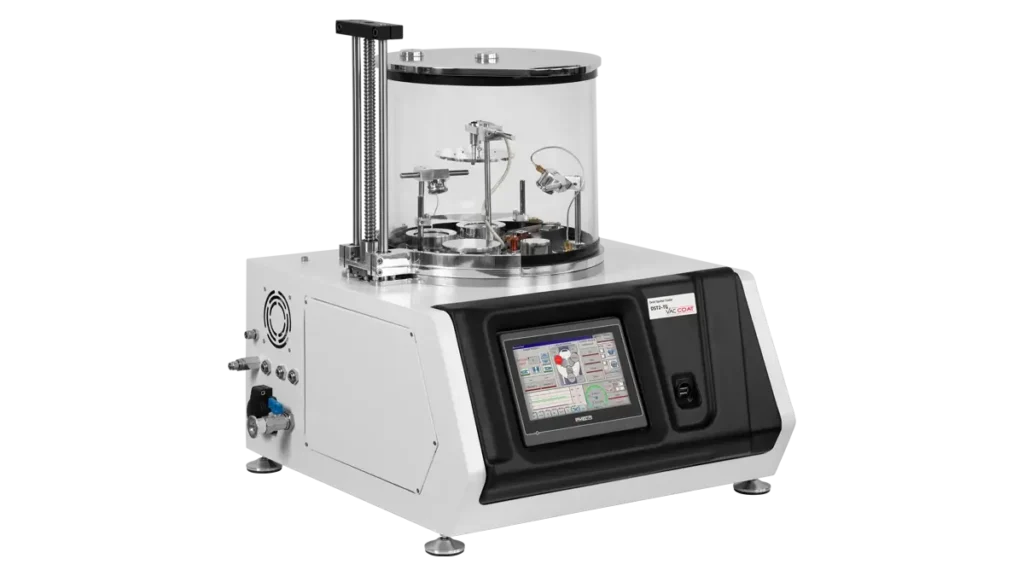
Vac Coat also offers hybrid coating systems with thermal evaporators, as desk sputter/carbon coater with thermal evaporator, DSCT-T, desk large chamber carbon coater and thermal evaporator, DCT-T-300, the triple-cathode desk sputter coater with thermal evaporator, DST3-T, designed for multi-purpose applications, and innovative double-target turbo-pumped sputter coater and thermal evaporator, glove box compatible DST2-TG, with interchangeable deposition sources up to maximum three sources. Moreover, Vac Coat pulsed laser deposition system, the so-called PLD-T coating machine, is also provided with thermal evaporation ability.
What is thermal evaporation and how does it work?
- Thermal evaporation is a physical vapor deposition (PVD) method to obtain a thin film of a materials by heating and vaporizing it in a high-vacuum chamber. Condensing the vapor on the substrate surface results in forming a thin and uniform film.
Vac Coat systems use resistive heating to achieve stable, repeatable coatings with excellent purity.
Which materials can be deposited by thermal evaporation process?
Thermal evaporation is ideal for metals and compounds with relatively low melting and evaporation points such as Al, Au, Ag, Cr, Ni, Ti, and Cu according to the deposition table: https://vaccoat.com/deposition-material-table/.
With the proper source configuration and crucible design, even oxides, semiconductors, and organic materials can be deposited precisely. We strongly recommend to use thinner crucibles and boats as possible, so as to obtain higher temperatures at lower currents.
Why is high vacuum crucial for the thermal evaporation process?
- Maintaining a vacuum of 10⁻⁵ to 10⁻⁶ mbar ensures larger mean free path for the vaporized atoms, so vapor atoms travel directly to the substrate without colliding with air molecules, which results in cleaner films with higher purity in a low oxygen/nitrogen containing environment, improved film adhesion to the substrate, and better control over film structure.
Vac Coat thermal evaporator chambers are equipped to turbomolecular pumps and are engineered for rapid pump-down and stable vacuum performance.
How do you achieve uniform film thickness in thermal evaporation?
- Uniformity depends on chamber geometry, including source-to-substrate distance, substrate dimensions, and vapor flux. Vac Coat systems are designed with motorized substrate rotation stage, with adjustable source-to-substrate distance to ensure consistent thickness across the substrate. For example, thickness uniformity > 5% is achievable for the 4-inch diameter substrate.
How is the deposition thickness monitored and controlled in thermal evaporators?
- A film thickness monitor using a Quartz Crystal Microbalance (QCM) sensor continuously monitors deposition rate and total thickness during coating process, in the range of 1-1000 nanometer, with the precision of 1 Angstrom and accuracy of 1 nanometer.
Vac Coat systems are integrated with a digital thickness controller that allows users to preset target values and automatically stop the deposition process when reached, so as to ensure repeatability in every coating cycle.
Does the thickness meter requires calibration?
- Yes, since the sample can be placed in different positions due to the thickness meter, the correct thickness of the deposited film can be read through finding the proper tooling factor.
What source types are available?
- Depending on the required evaporation material, one can use boats for aluminum, gold, and other common metals, and baskets for fast evaporation of wires and pellets. Powder materials will be precious materials like gold and silver may be wasted if evaporated by basket (Powders cannot be used as they will erupt and spill out of the source as the temperature increases). Sources are made of high-melting temperature materials like Mo, Ta, or W. The proper source shape and material for the desired evaporation material should be checked in advance. Vac Coat modular design lets users easily interchange source holders to suit different materials.
How is cross-contamination prevented?
- To maintain film purity it is crucial to utilise dedicated source for each material. Flashing the source by a high current flow before filling it with the coating material helps to remove contaminations before deposition process. Also, the coating material compatibility with the source material should be checked.Closing the shutter during source heating (pre-heating process) and cleaning the chamber regularly, helps to prevent cross-contamination of the resulting thin film.
The triple sources in DTT are specially designed so as to reduce contamination and downtime between processes.
Is substrate heater required in thermal evaporation? Can it be installed in DTT?
- Heating the substrate improves film adhesion, density, and crystalline quality. Our optional substrate heater (up to 500 °C) with 3-inch diameter, is precisely controlled by PID, which allows users to tailor the film’s microstructure to their application — from optoelectronic layers to MEMS coatings.
Can I deposit multilayer or composite films with DTT?
- Yes. The user can build multilayer, alloy, or graded films by sequentially evaporating materials (up to three different source material in DTT) under vacuum.
Our triple-source configuration in DTT with three evaporation sources enable coating complex multilayer deposition within a single run without breaking the vacuum.
What safety features are built in?
- DTT triple-source thermal evaporator is equipped with water-cooled electric feedthroughs and water-flow sensor that will turn-off the power supply if water flow is hindered. The system includes vacuum and high-temperature interlocks, emergency shut-off circuits, and thermal shields and protective covers.
Is there any time limit for the evaporation process?
- Since the feedthroughs are water-cooled, the evaporation process in DTT can proceed longer than DTE, however, the maximum current (100 A) should not be used longer than 15 minutes to prevent damages to the chamber components.
Does this system need a chiller?
- DTT thermal evaporator requires a chiller with maximum 10 m pump head (lift) or 1 bar pressure that affords about 1 L/min water flow is required for water supply to efficiently cool the feedthroughs and water-cooled thickness meter and ensure safety. The chiller can be ordered together with the system when placing the order, or purchased from local providers.
What kind of boats or baskets are suitable for source?
- The compatibility of the coating material with the source material should be checked beforehand. For example, melted Al erodes tungsten boat and results in impure coatings. Utilizing thinner wire for basket (such as baskets made of a single strand of wire), or smaller boat length and width, reduces the required current for evaporation, resulting in less heat generation and more control over deposition rate and time.
How does thermal evaporation compare to sputtering?
| Feature | Thermal Evaporation | Sputtering |
| Film purity | Very high | High |
| Process complexity | Simple | Moderate |
| Deposition rate | Moderate | High |
| Substrate heating | Not suitable for heat-sensitive samples | Good |
| Suitable for high-melting-point materials | Limited | Excellent |
| Typical applications | Metal films, Optical coatings, Organics | Hard coatings, Dielectrics, Oxides, metal films |
| Thickness control | Moderate | Good |
Which deposition system is a proper choice for thin film deposition for OLED applications?
- Since the OLED materials are complex organic substances, these materials have a very specific evaporation temperature and are sensitive to even small variations in the temperature. So OLED production requires a different method of evaporation control using refined Knudsen cells, which is not supported in DTE or DTT evaporation systems. Though, Vac Coat thermal evaporators can be used to deposit metal contact layers for OLEDs. Considering thermal radiation during the evaporation process, DTT is a more suitable choice for depositing thicker layers due to its larger source-to-substrate distance compared to DTE.
Which deposition system is suitable to produce thin films for Perovskite solar cell application?
- The DTT thermal evaporation system with triple evaporation source holders with the ability of sequential evaporation without breaking the high-vacuum condition, and 300 mm Dia. chamber is a proper choice for Perovskite solar cell layer deposition. Also, the chamber can be offered with extended height of around 40 cm to reduce the damage to heat-sensitive samples and obtain more uniform coatings. Whereas, DTE with small chamber and a single thermal evaporation source is not a proper choice for Perovskite solar cell application, or where higher temperature or film thickness is required. Also, DTE is not suitable for coating large samples (> 2 inches dia.) or heat sensitive ones.
What is approximately the highest possible "melting-evaporation" temperature in the DTE coating machine? What materials is it applicable for? (aluminum, copper, silver, gold, etc)
- DTE is suitable only for deposition of thin films (<100 nm thickness) in a short time (< 10 minutes, Max. current for 5 min) on small samples (< 3" dia.) that are not sensitive against heat radiation, whereas DTT can be used for longer-duration deposition processes (15 min at Max. current). Both DTE and DTT could easily evaporate materials with a low evaporation temperature like Al, Cu, Ag, Au, MgF2 and ….
Since DTE and DTT use high-current power supply for the deposition process, is it possible to connect the power supply to normal sockets/normal electrical installation?
- For the DTE and the DTT, both of these external power sources work with single phase voltage and can be connected to normal mains based on the regional condition (110-120V or 220-240V), 50-60 Hz, Max consuming power is 1.2 KW for DTE and DTT.