
Products
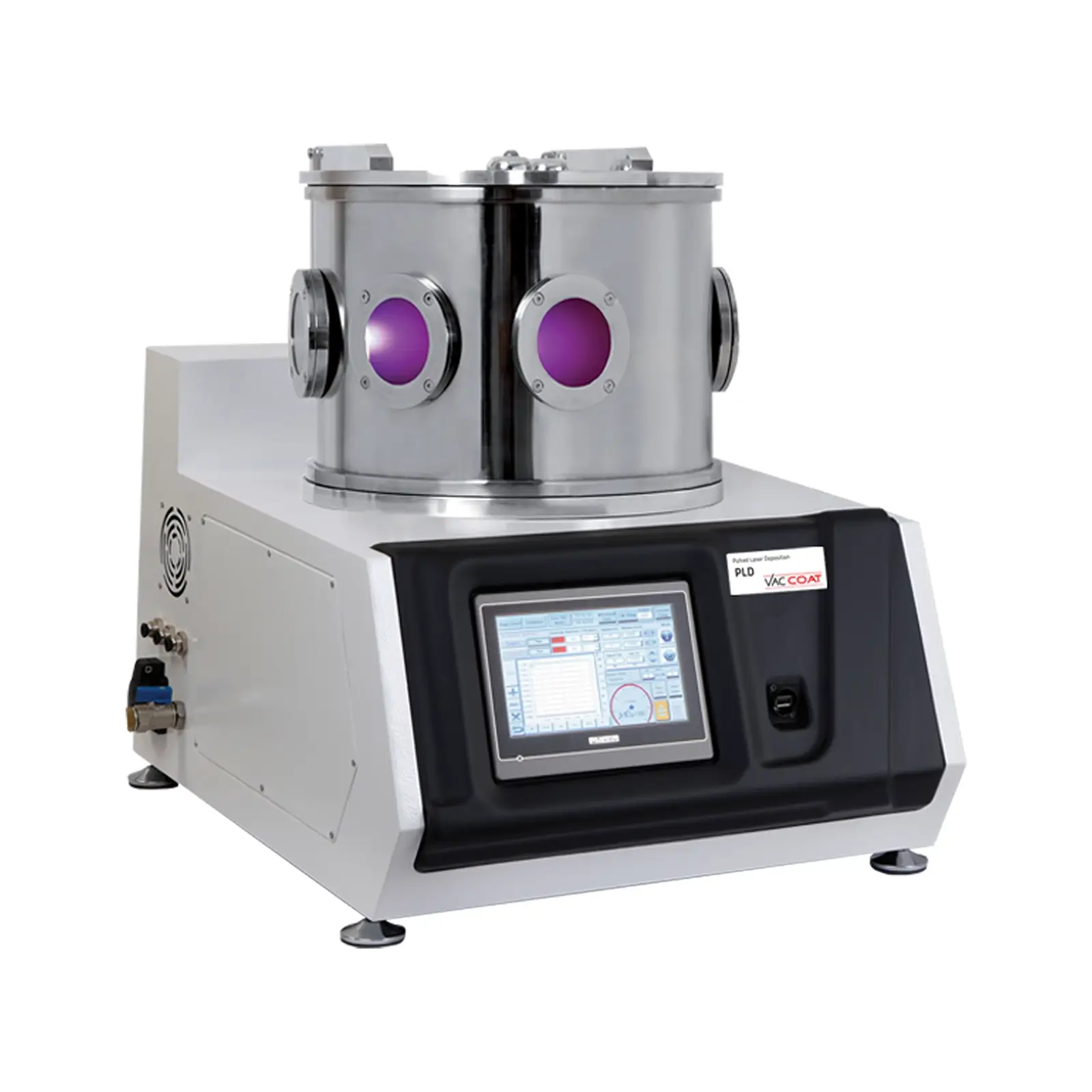
Pulsed Laser Deposition and Thermal Evaporator System – PLD-T
for high-quality thin films in R&D workflows
High-stability pulsed laser deposition system
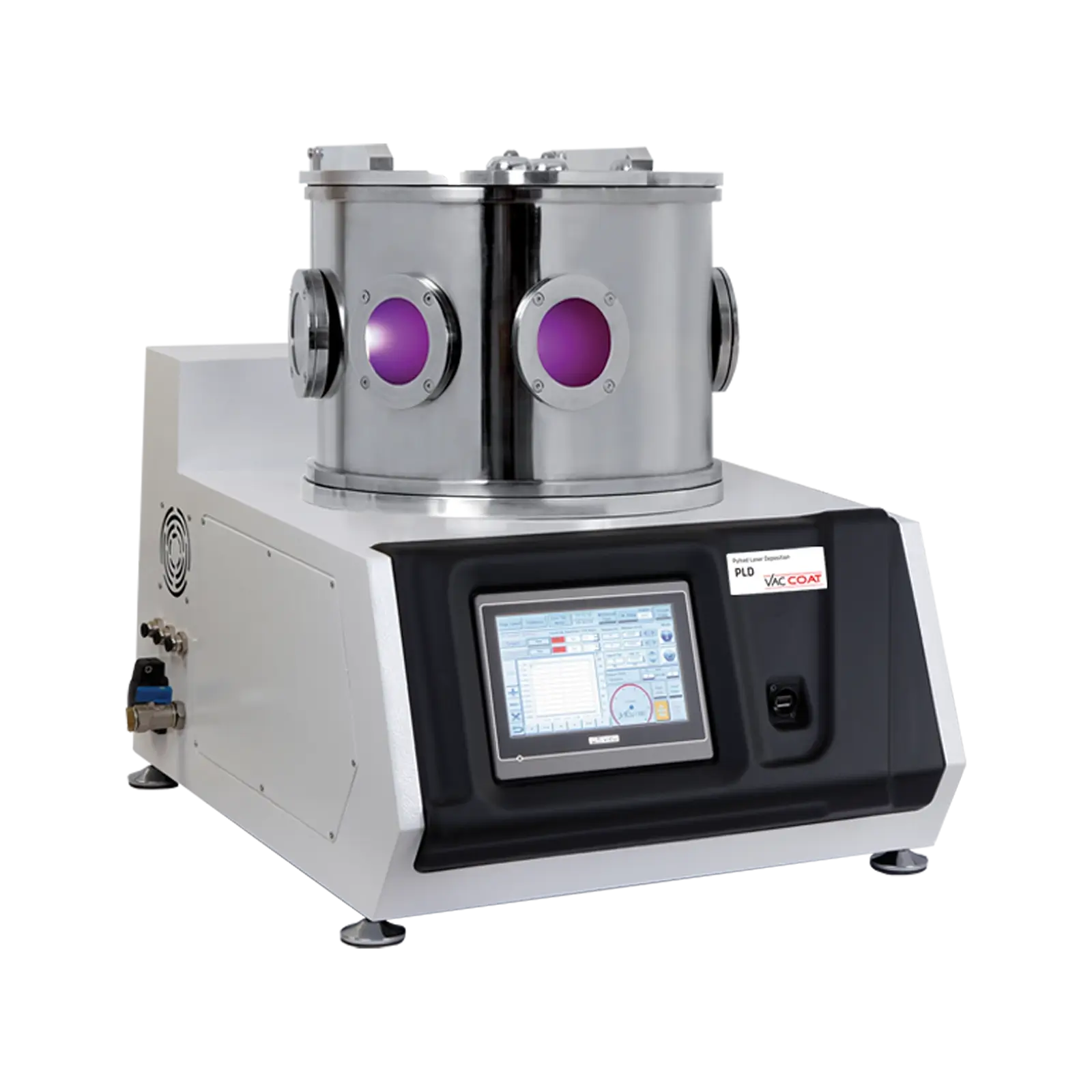
Versatile Pulsed Laser Deposition and Thermal Evaporator System – PLD-T is a high vacuum thin film deposition system enables to deposit different materials by both Pulsed Laser Deposition and Thermal Evaporation technique (Not Simultaneously). It can deposit complex materials and crystalline structures onto substrates with very little setup involved.
Pulsed Laser Deposition technique leads to efficient, none-thermal ablation and preserves the stoichiometry of the target materials. By applying this method, it could deposit materials such as nitrides, oxides, super lattices, polymers, and composites. PLD-T with triple thermal sources can also deposit thin films through thermal evaporation.
PLD-T physical vapor deposition system is a multi-technique precise thin film coating device that enables the user to perform state of the art research projects in various fields like optics, electronics, solar cell fabrication, etc.
Target Manipulator
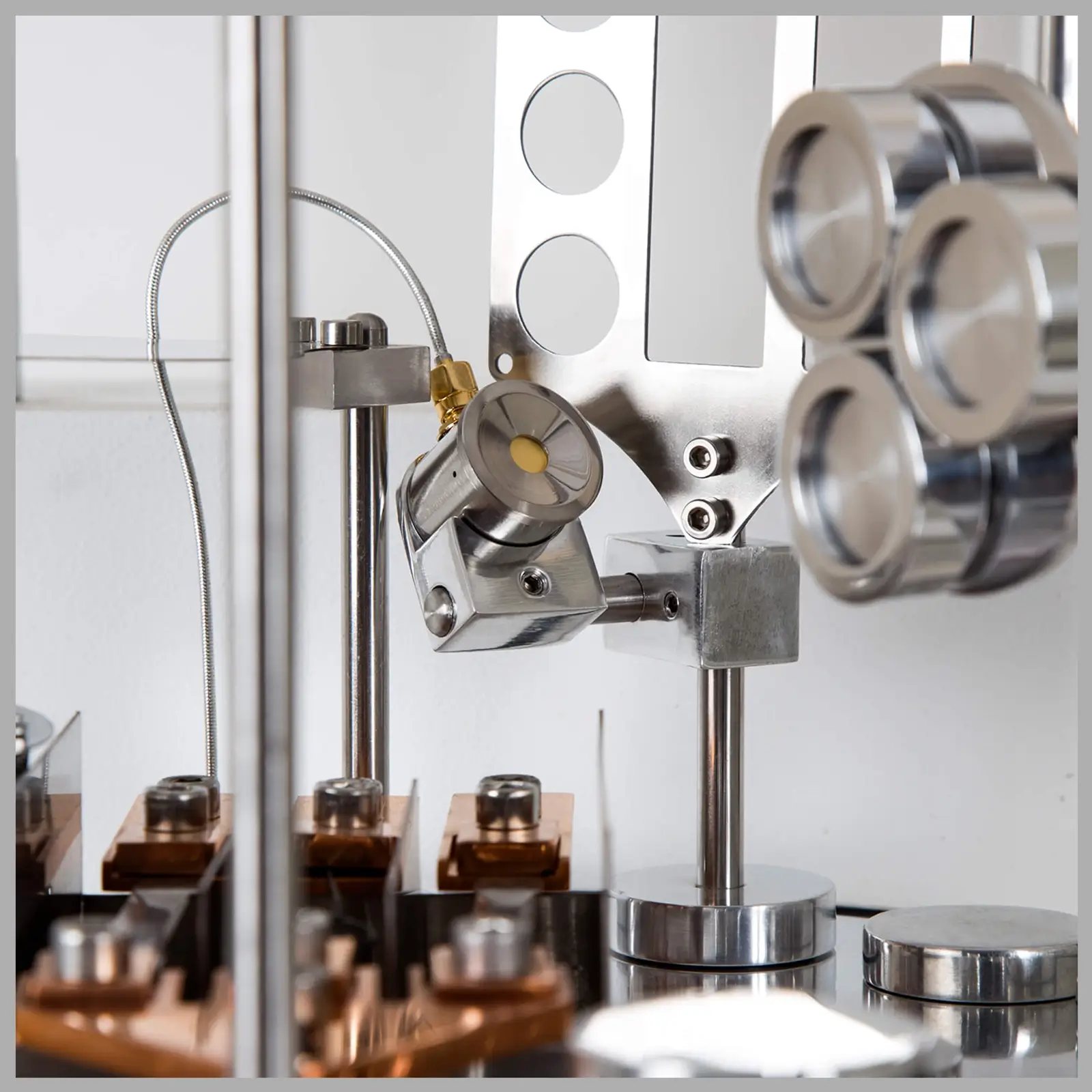
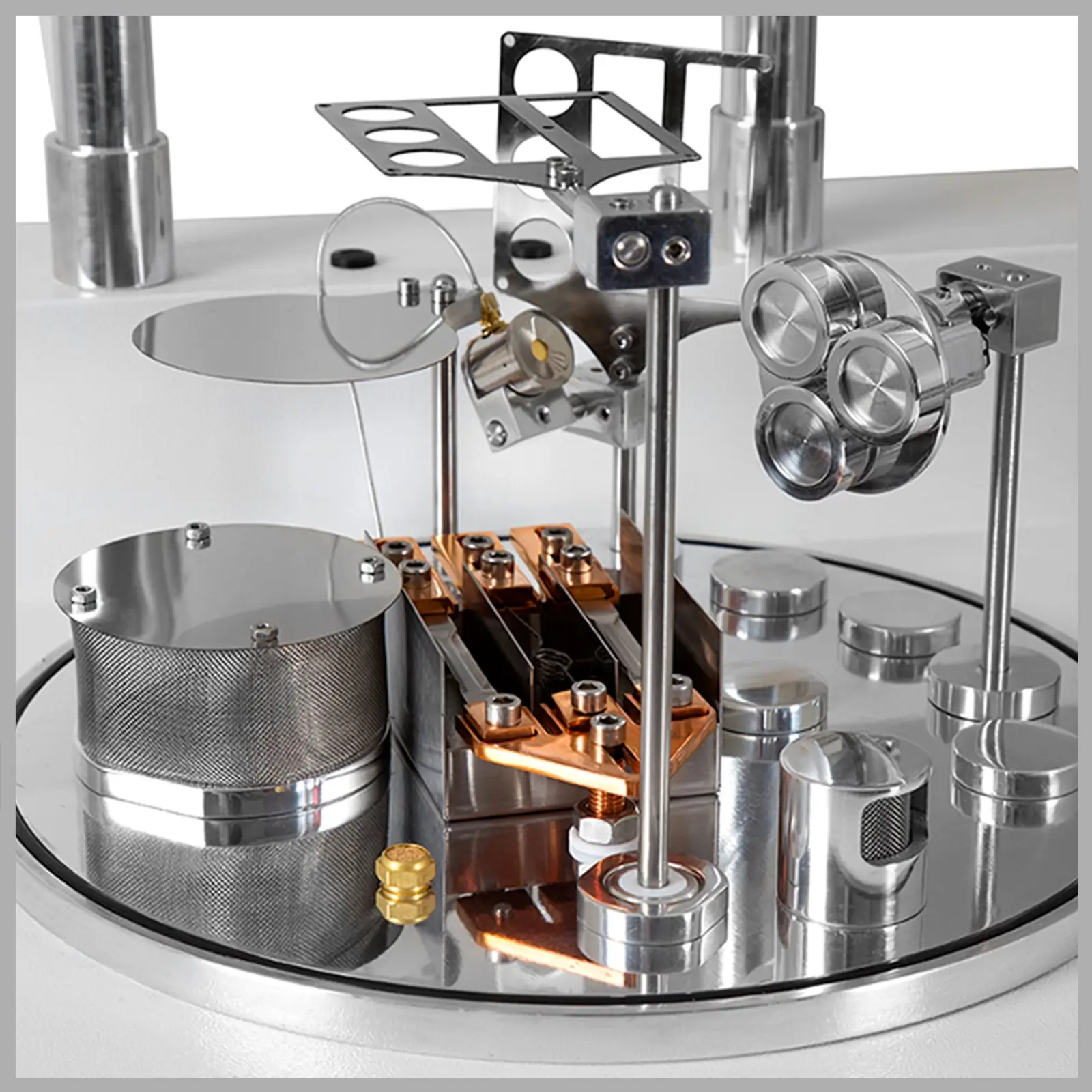
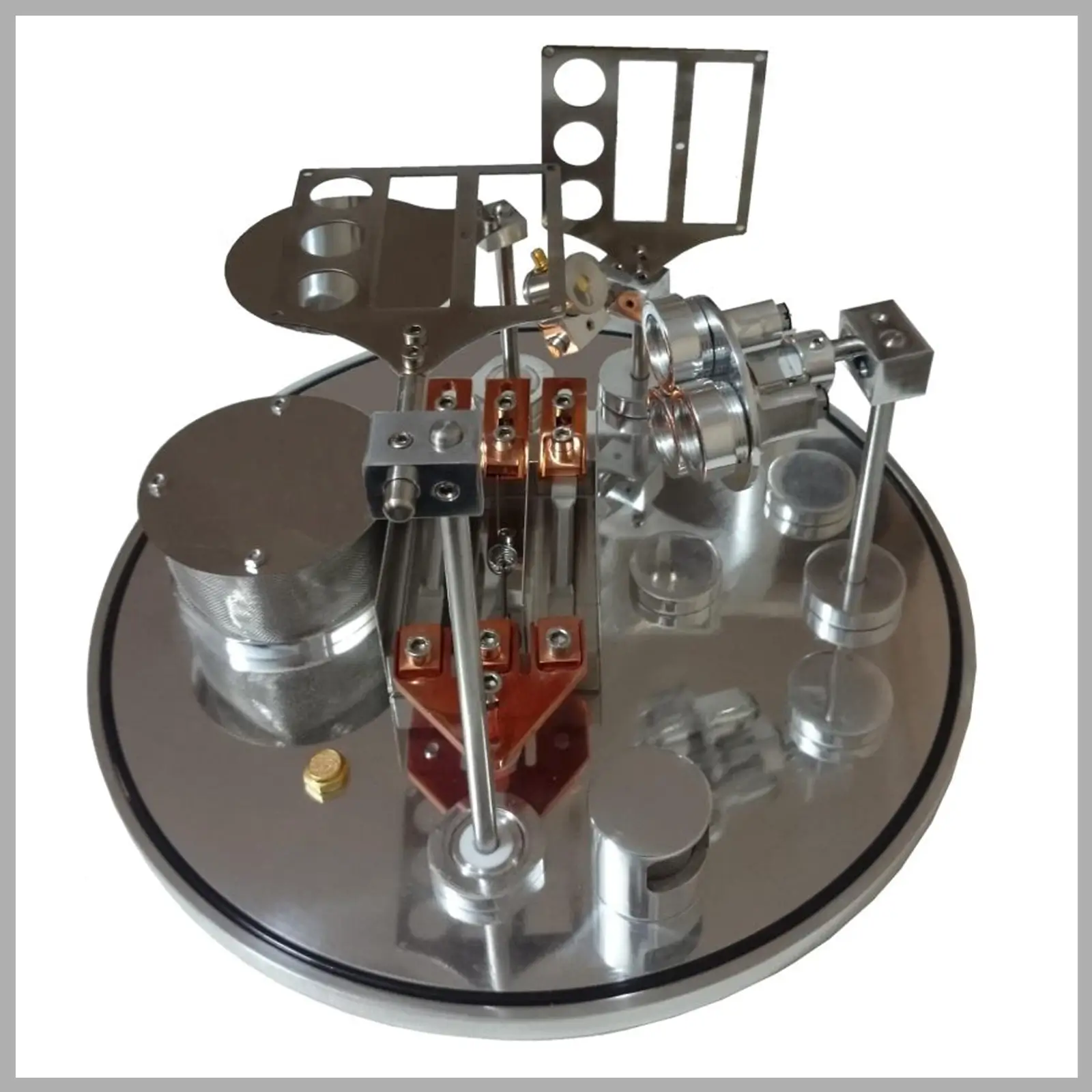
PLD deposition system is equipped with a multi-target manipulator which includes three 2 cm Dia. Targets are in standard size and all of our target manipulators are motorized to enable target rotation during the deposition process.
Thermal Evaporation
The Pulsed Laser Deposition System can be fitted with three independent heat resistance thermal evaporation sources. Different types of thermal evaporation sources (Boat, basket, and coil) can be installed on the thermal source holders for controlled thermal evaporation of a wide range of materials onto the substrate. The high-current power supply and low-voltage (Resistive) thermal evaporation platform are suitable for a wide variety of thermal evaporation applications. The thermal evaporation configuration is equipped with water-cooled feedthroughs accompanied by temperature sensor.
- High vacuum level with a built-in turbo pump
- Two-stage rotary vane backing pump (Diaphragm or scroll pump)
- High-current DC power supply suitable for thermal evaporation of different materials
- Quartz crystal monitoring system for real time thickness measurement (1 nm precision)
- Reactive gas injection control through precision Mass Flow meter (MFC)
- Full-range vacuum gauge
- Rotatory sample holder with adjustable rotation, height, and tilt (For 3-inch sample holders)
- Target manipulator with adjustable rotation speed
- 3 thermal sources and special feedthrough
- Equipped with electronic shutter (For thermal evaporation configuration)
- Equipped to motorized boat selection
- Two-year warranty
- Vac coat Products are covered worldwide by both public and product Liability Insurance in case any property damage or personal injury happens caused by the Vac Coat systems.
- Intuitive touch screen to control the coating process and rapid data input
- User friendly software, updatable via network
- Semi-full automatic timed or thickness coating process (Optional)
- Deposition parameters adjustable though the touch screen panel (Optional)
- Records and plots coating parameters graphs
- 500 °C programmable substrate heater with software control
- Metal, semiconductor, and dielectric films
- Nano and microelectronic
- Solar cell applications
- Optical components coating
- Thin film sensors
- Magnetic thin film devices
- Turbomolecular pump with different pumping speeds (Optional):
| Pumping Speed | 90 l/s | 250 l/s | 350 l/s |
| Ultimate Pressure | 8 x10⁻⁶ Torr | 3 ×10⁻⁶ Torr | 8 ×10⁻⁷ Torr |
- Unlimited deposition time without breaking the vacuum
- Records and plots coating parameters graphs
- Deposition process curves and data transfer by a USB port to PC
- 2 kW high-current power supply
- Water-cooled high-current electric feedthroughs
- Utilities: 220 V – 110 V, 50/60 HZ
- Dimensions: 500 mm H × 600 mm W × 470 mm D
- Weight: 50 kg (Pump, , and instrument case)
The PLD-T has the following options and accessories:
- Thermal evaporation sources (Boat/Basket/Coil)
- 500 °C substrate heater
- Thermal evaporation source materials
- Quartz crystal sensors
- Sealing gaskets
Thermal Sources Holders
The Pulsed Laser Deposition System can be fitted with three independent heat resistance thermal evaporation sources. The good design of the evaporation source holder causes no contamination transfer from a source materials to other ones. The length of source holders can be adjusted in the range of 5~10 cm to meet the user requirements.
Clean Vacuum
The PLD-T is designed with a 300 mm OD and 200 mm H, SST vacuum chamber. The PLD-T is fitted with an internally mounted turbo molecular pump, backed by a 6 m3/h two-stage rotary vane pump (Optional). It introduces a clean vacuum without oil contamination which normally exists with an ordinary diffusion pump.
- Dimensions: 420 × 480 × 370 mm (H × W × D)
- Weight: 30 Kg
- Vacuum Chamber Dimension: Borosilicate Glass, 170 mm Dia. × 140 mm Height
- Display Screen: 7” Diagonal (16:9) 800 × 480 High Color- Graphic TFT- LCD
- Data Transfer: USB Port – For Transferring the data and graph to PC
- Target Dimension: 1 Disc, Diameter ranging 50-56 mm, Thickness 0.1~3 mm (The preferred Thickness is less than 1 mm)
- Sample Holder Dimension:
- Standard holder with 60 mm Dia., can contain:
- 23 × 9.6 mm stubs or
- 14 × 12.7 mm stubs or
- 5 × 19 mm stubs
- Sample holder with 100 mm Dia. with Offset gear box can contain 40 × 12.7 mm stubs (Optional)
- Standard holder with 60 mm Dia., can contain:
- Chamber’s Lid: Made of Aluminum and can locate 1 Cathode on it
- Specification: Crystal thickness gauge with sensor, gold coated crystal quartz, oscillator
- Resolution: ±1 Angstrom
- Accuracy: ±1 Nanometer
- Vacuum Pump: Two-stage rotary vane
- Vacuum Gauge Range: 1 × 10³ – 1 × 10⁻³ Torr
- Final Vacuum: 30 × 10-3 Torr
- Sputtering: Continuous Sputtering, Time, and Thickness dependent
- Gas: Argon as a carrier gas with %99.999 purity
- Electric Power Supply: DC: 80 W switching DC power supply
- Control of Argon supply: Electronic leak valve
- Electrical Inlet: Inlet: 220-240 V, 50/60 Hz; or 110 V, 50/60 Hz *
* Single-phase AC power with appropriate earth connection is required.
Touch Screen Control
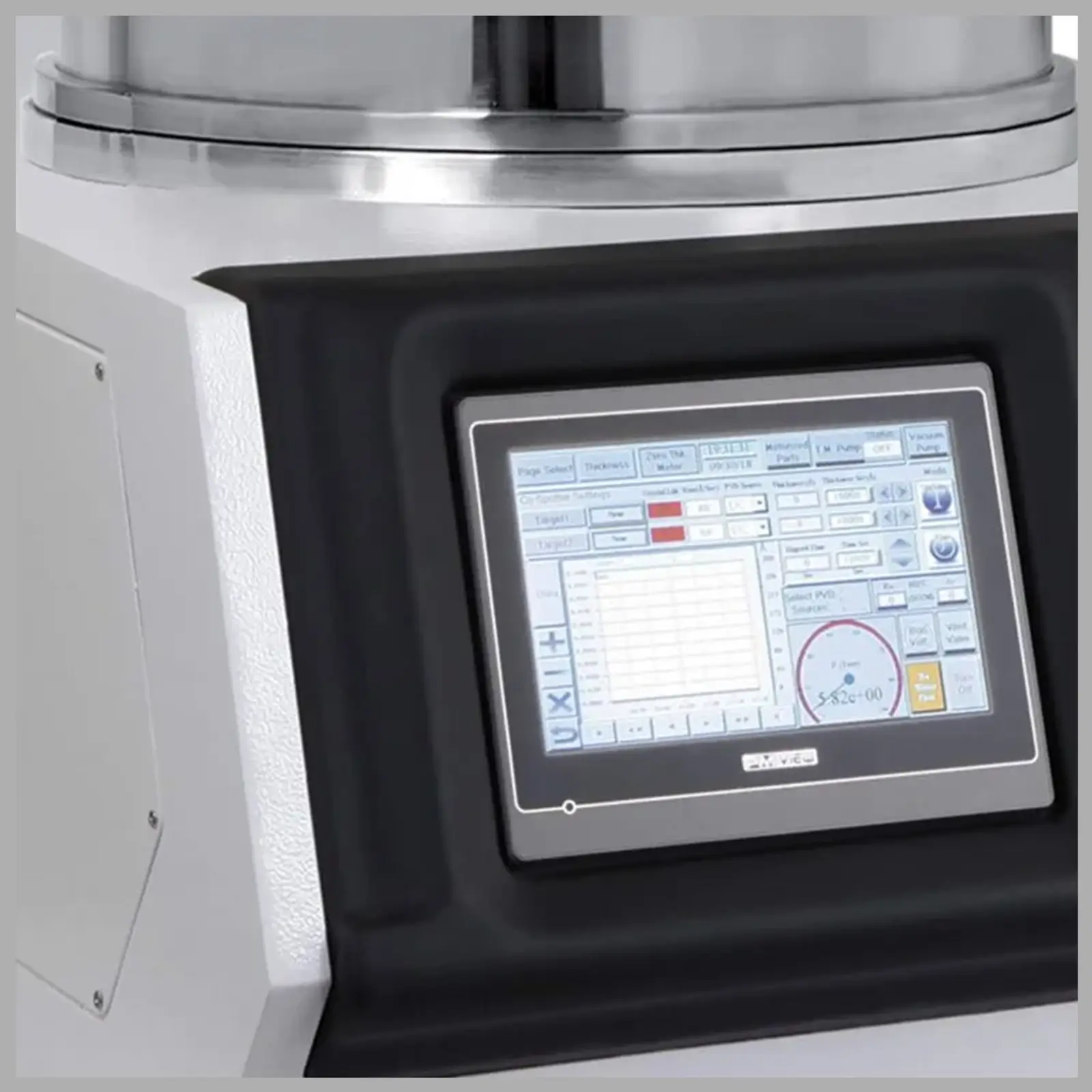
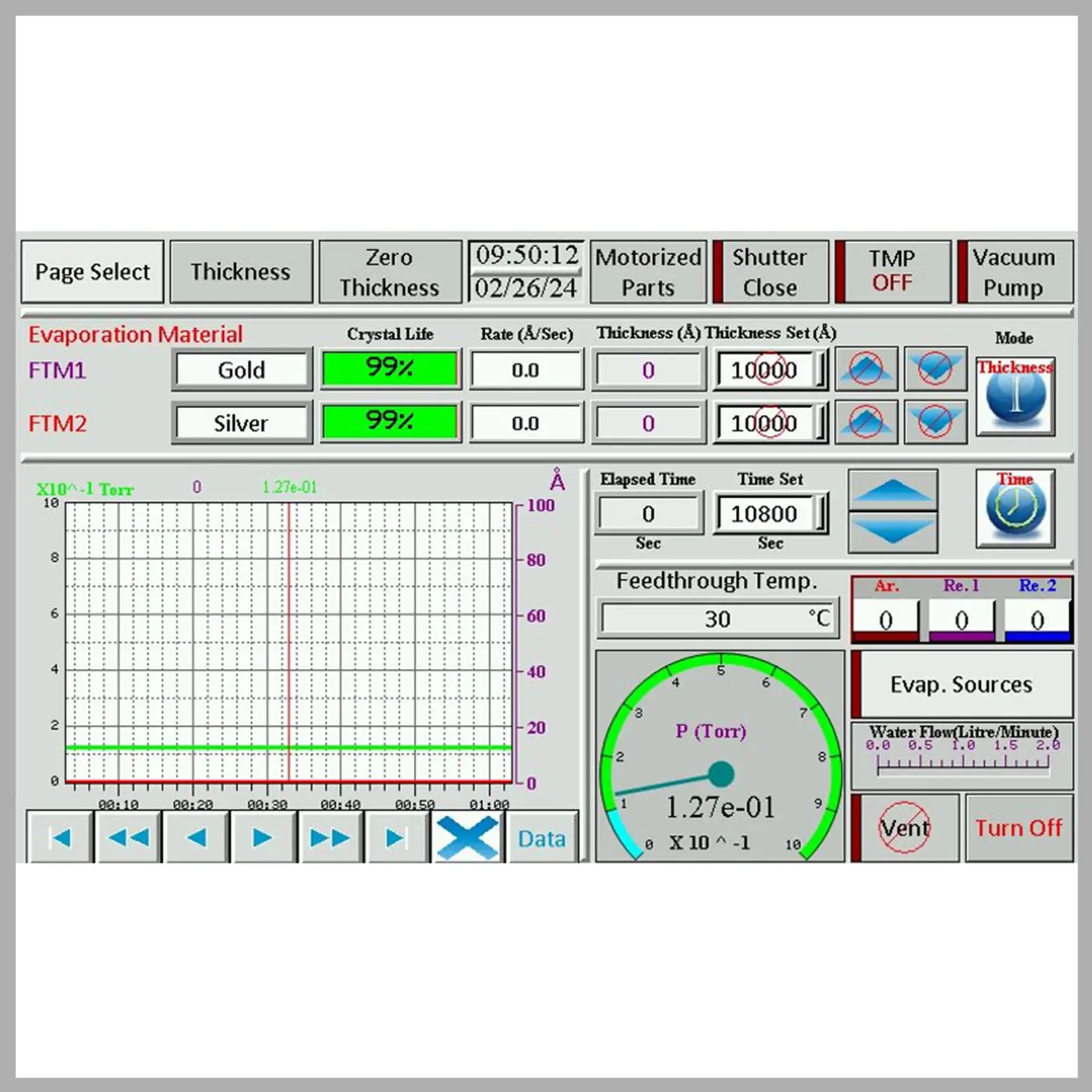
The pulsed laser deposition system, PLD-T, is equipped with a 7” colored touch-screen panel using user-friendly software to control and adjust the deposition process data. The vacuum and coating sequence information can be observed as digital data or curves on the touchscreen and the last 300 coatings are saved on the history page.
Talk to Our Engineers
What is Pulsed Laser Deposition (PLD) method?
PLD is a technique to deposit thin films by focusing a high-power laser pulse onto a target material (e.g., a ceramic) and vaporizing a small amount of it in the form of a plasma plume, which travels through the vacuum chamber to reach the substrate (e.g., a silicon wafer), where it condenses to form a thin, layered coating.
What is the basic setup of a PLD system?
Substrate Heater: To heat the substrate for growing crystalline films.A PLD system typically contains four key components, including:
- Laser: Typically an excimer (KrF, ArF) or Nd:YAG laser.
- Vacuum Chamber: Contains the target and substrate to have a clean deposition.
- Target: The material to be laser-ablated and deposited.
Why is PLD so popular in research?
- The greatest advantage of utilizing PLD technique for thin film deposition is stoichiometric transfer of the target material onto the substrate, which means the film's chemical composition is very close to the target's composition. This is crucial for complex materials like high-temperature superconductors (YBa₂Cu₃O₇) and complex oxides.
What kinds of materials can be deposited using PLD?
PLD method is widely used in coating various thin films of different materials, such as:
- High-Temperature Superconductors
- Complex Oxides (ferroelectrics, multiferroics, piezoelectrics)
- Dielectrics (SiO₂, HfO₂)
- Nitrides (TiN, GaN)
- Diamond-Like Carbon (DLC) films
- Metals and Semiconductors
- Biomaterials (e.g., hydroxyapatite)
What are the advantages of PLD compared to other deposition techniques like Sputtering or MBE?
PLD generally has better stoichiometric transfer for complex oxides compared to sputtering deposition, while sputtering technique benefits in providing thickness uniformity of thin film deposition over larger specimen, and is more established in industry.
MBE technique provides the ultimate control at an atomic level and superior film quality but is much slower, more complex, and far more expensive than PLD.
In general, the PLD technique advantages include:
- Stoichiometric Transfer: Excellent for multi-component materials.
- High Deposition Rate: Relatively fast compared to some other techniques.
- Versatility: Can deposit virtually any material—metals, semiconductors, insulators, polymers—simply by changing the target and using the proper laser.
- Clean Process: The laser is outside the chamber, minimizing contamination.
- Reactive Deposition: Easily done by adding a background gas (e.g., O₂, N₂).
What are the main challenges of PLD?
- Droplet Formation: Molten droplets or solid particulates can be ejected from the target and land on the film, creating defects.
- Small Deposition Area: The plasma plume is highly directional, leading to non-uniform thickness over large areas. This makes it less suitable for industrial coating of large wafers.
- Cost: High-power pulsed lasers are expensive to purchase and maintain.
- Film Thickness Uniformity: Requires careful optimization of the target-to-substrate distance and plume dynamics.
Why droplets are formed on the substrate in PLD method?
The droplets or particulates generated during the pulsed laser deposition from the target, are caused by subsurface boiling, splashing of molten material, or exfoliation of fragile target material.
The solutions to this problem include:
- Optimizing laser fluence (not too high)
- Using a smooth, polished target
- Rotating the target
- Using off-axis PLD (placing the substrate outside the direct line of sight of the target)
- Using a mechanical velocity filter to block droplets
What are the on-axis and off-axis PLD?
- On-Axis: The substrate is placed directly in front of the target plume, giving high growth rates but susceptible to droplet deposition.
- Off-Axis: The substrate is placed facing parallel to the target surface, so the film grows at a lower deposition rate from material that scatters in the gas phase, effectively filtering out droplets, resulting in much smoother films.
Why a high vacuum chamber is needed?
The higher the ultimate chamber vacuum (base pressure), the more contaminant gases (like O₂, H₂O, N₂) are removed. So the plasma plume can travel to the substrate in a high vacuum chamber without reacting or scattering, leading to a pure film.
Why is a background or process gas (like oxygen) sometimes used?
For depositing oxide materials, a background/process oxygen pressure helps to provide the oxygen needed during the deposition process to insure the correct thin film structure and properties and the proper film stoichiometry.
How does substrate heating benefit PLD?
- Heating the substrate provides thermal energy the arriving atoms to move on the surface or diffuse in the coated film and place in the correct crystal lattice sites, hence forming a high-quality, crystalline film instead of a disordered, amorphous one.
What are the key parameters to control in PLD?
The most important PLD parameters include:
- Laser Fluence: Laser energy per unit area on the target. It must be above the "ablation threshold" to create a plasma.
- Substrate Temperature: Critical for the crystallinity of the film.
- Background/process Gas Pressure: Determines the composition, phase, and even the stress of the film.
Why does the target need to be rotated during deposition?
- Target rotation ensures uniform erosion of the target surface and prevents drilling a single deep pit into the target, which would change the ablation characteristics and create non-uniform particles.
Does the Vac Coat model PLD (PLD-T) include a laser?
- It depends on the customer. Some customers already have a laser or have good quality laser manufacturers in their country and we prefer to buy the laser themselves due to reduced shipping costs and better after-sales service, but if they are willing, we will buy the laser for them.
What laser features should be noticed?
- According to the target material, substrate properties, the resulting layer compound etc., there are several features that should be determined prior to employing a laser for a PLD process, including pulse energy and duration, and laser wavelength.
Which lasers are commonly used in pulsed laser deposition process?
The laser features strongly depends on the desired application. The 1064 nm wavelength Nd-YAG laser that are mostly used in coating systems are offered in a wide range of single pulse energies and durations, rising the necessity to determine the required energy to be transferred to the target material type to be ablated. Excimer lasers are preferred for materials requiring high photon energy for ablation, such as coating DLC layers, RF-piezo, while femtosecond lasers are ideal for applications needing high precision and minimal thermal effects.
Is the laser controlled through the PLD system monitor?
No, the laser is controlled completely independent of the vacuum chamber and the coating system.
How are the laser and PLD coating system placed relative to each other?
The laser and PLD machine can be placed on one table or two separate tables. The height of the table on which the laser or machine is placed should be such that the laser beam can pass through the PLD viewport and hit the target.
Does the laser need a chiller?
Most lasers require a chiller, and when purchasing a laser, a suitable chiller must be purchased. However, if the device the customer wants is a PLD-T model, which in addition to PLD also has thermal evaporation capabilities, a chiller is required to cool its high-current electric feedthroughs and the thickness gauge crystal holder. For example, the S&A model CW3000 chiller is a chiller that can be used for both lasers and thermal evaporation feedthroughs at the same time.
How many thickness gauges does the PLD-T model have?
- Two, one water-cooled, which is used when we use the thermal evaporation section of the device and its location is fixed, and one that is mobile and not water-cooled, that is used for the PLD process.
Is the target size fixed in the PLD device?
- The standard target diameter is 20 millimeters, but it can be customized due to customer’s need.
What are the specifications of the viewport glass type through which the laser beam passes?
It depends on the wavelength of the laser beam and must be chosen in such a way that it does not absorb the laser light, for example, if using an excimer laser with a wavelength of about 248 nm, fused silica (quartz) viewport provides better transmission in the UV range.
What safety precautions should be taken when working with a laser?
Working with lasers in a PLD process requires carrying out safety precautions, before and during the coating process, to prevent life-threatening laser hazards. Some of the safety recommendations are listed below:
- Use appropriate laser safety glasses.
- Never stare at the beam.
- Remove reflective objects, like jewelry, from the beam path (also, anti-reflective coatings on the viewports can be used).
- Use proper warning signs in the area laser is operating.
- All laser equipment should be grounded to prevent electrical hazards.
- Manage the system cables to avoid having excessive wires or cables on the floor.
- Work with qualified personnel.