Rotary Pumps
Rotary pumps are a class of vacuum pumps that are used to provide a vacuum environment for various applications, such as thin film deposition, preserving air-sensitive materials, supporting high vacuum pumps (like turbomolecular pumps), etc. Rotary pumps also have many applications in industry due to their ability to work for a long time in industrial and difficult conditions. Accordingly, rotary pumps maintenance is crucial to preserve appropriate functionality.
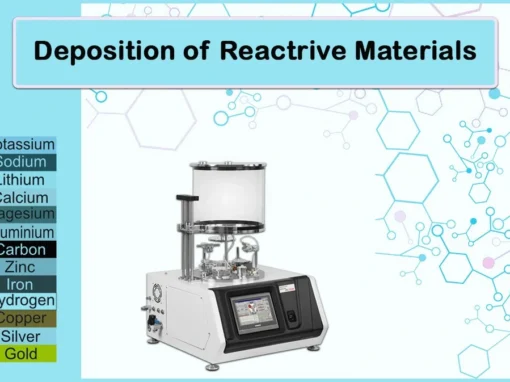
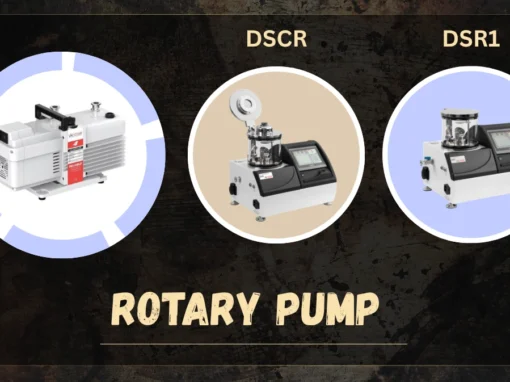
Almost all vacuum coating systems made by Vac Coat Ltd. are equipped with two-stage rotary pumps. The vacuum thin film deposition devices manufactured by Vac Coat, utilizes rotary pumps as the main vacuum pump as in the low vacuum sputter and carbon coaters, DSR1 and DCR, or as a backing pump to support the high vacuum turbomolecular pumps to create a high vacuum environment in high vacuum coating systems like DST1, DCT, DST3, etc.
How does a Rotary Vacuum Pump work?
Rotary pumps are a type of positive displacement pump that moves fluid by trapping a fixed volume of liquid and rotating it through the pump. They are ideal for handling viscous fluids, slurries, and delicate liquids due to their gentle, non-pulsating flow.
Rotary Vacuum Pumps are in the group of displacement pumps and are of the positive displacement type. This means that for each pump cycle, a constant volume of fluid is displaced, regardless of the pump pressure resistance. As a result, any blockage in the system can damage the pump and cause cracks in the system. Rotary pumps consist of a cylindrical chamber with an inlet on one side and a discharge outlet on the other. In these pumps, the rotor (smaller in diameter than the cylindrical chamber) is placed so that it is located above the center line of the cylindrical chamber so that the minimum distance between the rotor and the chamber is at the top and the maximum distance is at the bottom.
Rotary pump types
The Rotary pumps are categorized into two main groups: Single-rotor and Multiple-rotor pumps, which involve several subgroups:
Single-rotor pumps
- vane
- piston
- flexible vane
- screw
Multiple-rotor pumps
- lobe
- gear
- circumferential piston
- screw
Whereas rotary vane pumps are classified base on different vane types, such as sliding, flexible, oscillating, rotating, and external vanes.
Rotary Vane Pumps
Rotary vane pumps are extensively used in various industries due to their efficient and reliable function. A rotary vane pump main components are rotor, vanes, stator, and the housing. The vanes sliding against the stator walls creates the required vacuum. The rotor rotates inside the housing by an external force to generate the pumping action. The rotor caries vanes that move in and out as the rotor rotates and slip in the rotor slot (Figure 1). These vanes are usually in contact with the chamber wall by centrifugal force or spring. In order to complete the contact surfaces, a controlled amount of oil is pumped into the cylindrical chamber.
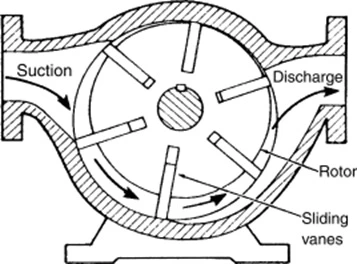
The rotary vane pumps can also be sorted as lubricated (oil-sealed) rotary vane pumps, dry-running (oil-free) rotary vane pumps, and liquid ring pumps, each suited for particular applications and working environments.
Rotary Vacuum Pump Applications
Rotary pumps can be used to provide low and medium vacuum environments, which can fit chemical and pharmaceutical processes, as well as environmental engineering, including:
- Degassing
- Crystallization
- Drying
- Distillation
- Evaporation
- Super cooling
- Fractioning
- Impregnation
- Vacuum coating
- Vacuum filtration
- Aeration (ventilation)
- Dust extraction
Rotary Pumps Maintenance
If these pumps properly maintained and used, can last many years. Unfortunately, most users are not familiar with the correct way to use and maintain pumps. In general, 5 practical recommendations regarding these pumps can be said:
- Don’t Restrict the Exhaust Line: blockages may cause the pump to work slowly, overheat, and finally fail.
- Keep the Pump Cool: the pump should work in a place with sufficient air flow to avoid overheating.
- Use Quality Filters: to prevent particulates entering the pump.
- Use the Gas Ballast: venting the water vapor from the vacuum pump helps to reach the optimum pressure.
- Eliminate Oil Mist: using the proper pump exhaust filter removes oil mist from the exhaust, which can cause health hazard and wear to the pump.
By following the 5 tips above, you can use these vacuum pumps for a longer period of time. For more information, refer to the following link:
[2] Auxiliary Equipment, 2016, Standard Handbook of Petroleum and Natural Gas Engineering (Third Edition)
[3] https://www.engineeringtoolbox.com/positive-displacement-pumps-d_414.html
[4] Karassik, Igor et al. “Pump Handbook.” 4th ed., McGraw‑Hill, 2008
[5] https://www.iqsdirectory.com/articles/vacuum-pump/rotary-vane-vacuum-pumps.html
[6] https://www.fluidotech.it/en/technical-support/technical-insights/rotary-vane-pumps/